
Curacao Said Goodbye to the World Cup With Royalty Dancing in Their Dressing Room
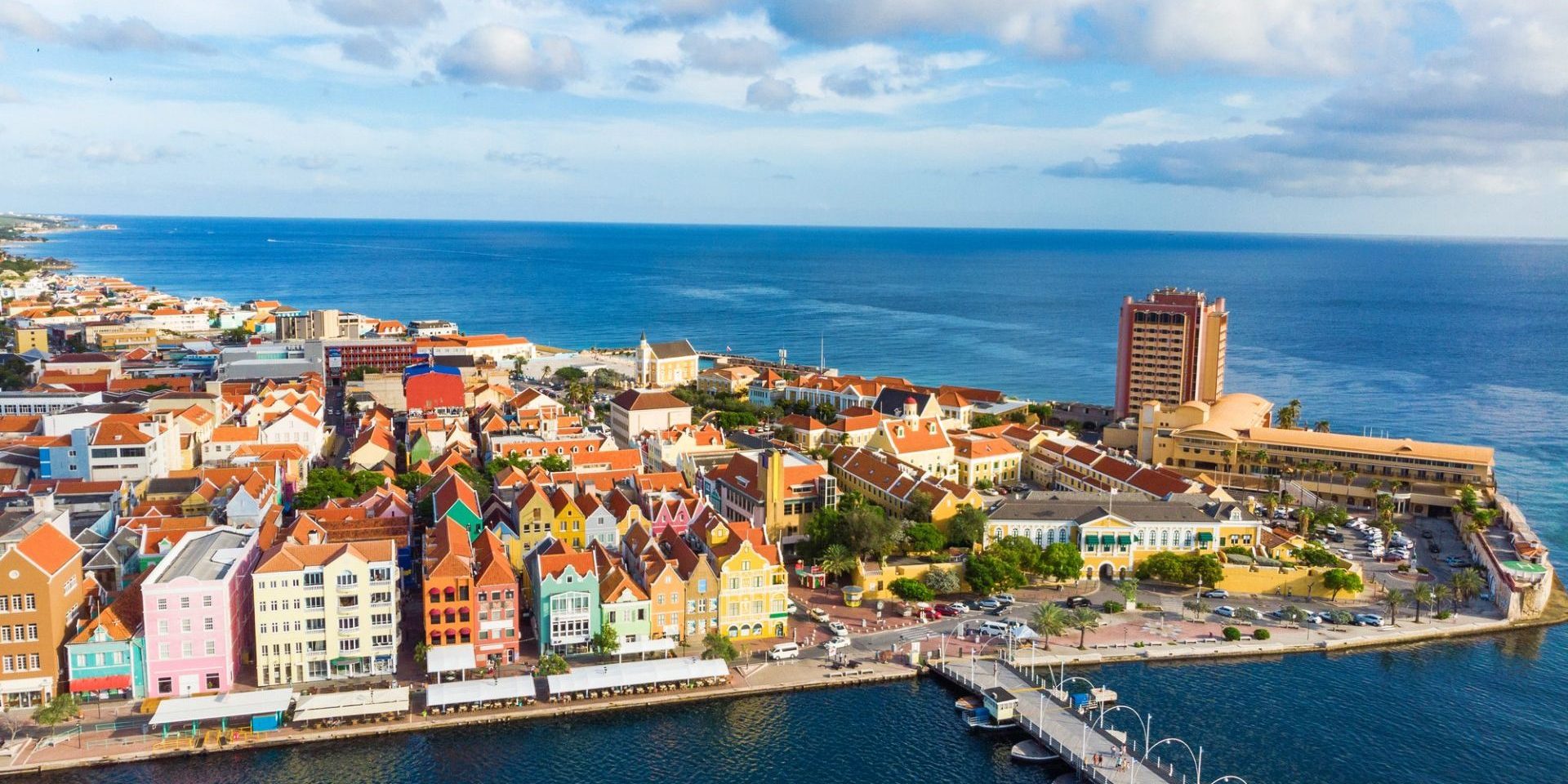

Table of Contents
Before the tournament began, Gervane Kastaneer was handed a letter from his father. FIFA had filmed Gerrit Kastaneer speaking to his son, telling him how proud he was of everything it had taken to get here, of the years spent climbing back from an injury that almost ended a career before it truly started. The footballer wept. A few weeks later, on a humid night against Ecuador, Kastaneer came off the bench with under ten minutes to play, a substitute for a country of roughly 156,000 people making its debut at a World Cup. Curaçao did not win the group. They did not reach the knockouts. And yet when the final whistle blew on their tournament, the King and Queen of the Netherlands were dancing with the players in the dressing room, and nobody who saw it will forget the smallest nation ever to grace the world’s biggest stage.
The Smallest Nation at a World Cup
Curaçao is a Caribbean island, a former Dutch colony of brightly painted waterfront houses and a population smaller than many European towns. When they qualified, they became the least populous country ever to reach a World Cup, a record that frames just how improbable the whole adventure was. They got there under Dick Advocaat, the veteran Dutch coach in his late seventies who has managed across four decades and several continents, and who took on the island’s national team as one final, unlikely project. The connection runs deep. Curaçao remains part of the Kingdom of the Netherlands, and its football has long been shaped by Dutch coaching, Dutch academies, and players raised in the Netherlands with island roots.
The draw was unforgiving. Group E threw them in with Germany, Ivory Coast and Ecuador, three sides with vastly greater resources and pedigree. Germany handed them a 7-1 thrashing that exposed the gulf in quality at the very top. Ivory Coast beat them 2-0. By any cold measure, Curaçao were the weakest team in their group, and the results said so. But football is not only a cold measure, and the story Curaçao told was never going to be written in the standings.
The Point That Meant Everything
Against Ecuador, Curaçao earned the moment that justified the entire campaign. They held a far stronger side to a 0-0 draw, defended for their lives, and walked off with the first World Cup point in their history. Eloy Room, their goalkeeper, was magnificent. The whole team threw bodies in front of shots and refused to break. For a nation that had never been anywhere near this stage, a single point against Ecuador carried the weight that a trophy carries for the giants.
Kastaneer was part of that night, sent on in the closing minutes to help see the result home. He described the scenes afterwards with the wonder of a man who could scarcely believe them. When full-time came, the players celebrated as though they had won the tournament. Then the Dutch King and Queen, along with their daughter, came to visit them in the changing room, and the celebration turned into something out of a film. They ended up dancing together, royalty and footballers from a tiny island, sharing a joy that had nothing to do with rankings or expectation. “Something we’d seen happen to other teams, but never to us,” was how Kastaneer framed it. For one night, Curaçao were the team everyone wanted to be near.
The Injury That Almost Ended It
To understand why that letter from his father reduced Kastaneer to tears, you have to go back to January 2017. He was a young forward on the verge of the move that changes a life. Mainz, of the German Bundesliga, had watched him play a friendly against them and liked what they saw. They agreed a fee with his club, ADO Den Haag, and offered him a five-year contract. Life-changing money, top-flight German football, the kind of break that lower-division players spend careers chasing.
There was one condition. ADO wanted him to play a match against PEC Zwolle before he completed the transfer. He did. And in that game, he suffered a freak eye injury that threatened to force him into early retirement. The dream move evaporated. A player who had been one step from the Bundesliga suddenly faced the possibility that he might never play professionally again. What followed were years of recovery, doubt, and the slow rebuilding of a career that the football industry had quietly written off.
That is the long road back his father referenced in the letter. Not a smooth rise, but a comeback from the edge of the end. When Gerrit Kastaneer told his son how proud he was, he was talking about every dark month between the injury and the World Cup, every moment Gervane could have walked away and did not. The forward made it back, made the Curaçao squad, and stepped onto a World Cup pitch nine years after the injury that should have stopped him. The tears made sense.
Advocaat’s Final Adventure
Dick Advocaat has coached the Netherlands, Russia, South Korea, Belgium and a string of major clubs. He has stood on the touchline at World Cups and European Championships, managed superstars, and won titles. Taking charge of Curaçao was never about adding silverware to a glittering record. It was about doing something pure at the end of a long career, guiding a group of overlooked players to a place their island had never been. He brought structure, belief, and the kind of tournament experience that money cannot buy a small federation.
The 7-1 defeat to Germany will sting, and Advocaat is too honest a coach to pretend otherwise. Curaçao were outclassed by one of the favourites, and the scoreline was a reminder of how steep the climb really is. But the draw with Ecuador, the organisation, the refusal to be humiliated in their other matches, all carried his fingerprints. He took a team that had no business being at a World Cup and made sure they competed with dignity. For a man with nothing left to prove, it was a fitting way to spend what may be his last tournament in the dugout.
Why the Small Nations Matter
The expansion of the World Cup to forty-eight teams was sold partly on this promise, that more nations would get their moment, that islands and minnows and debutants would finally taste the biggest stage. Critics worried about lopsided scorelines and watered-down quality, and the Germany result will be held up as evidence. But Curaçao answered the sceptics in their own way. They gave their people a point, a dance with royalty, and a player’s tearful redemption story broadcast to the world. Those things do not show up in a goal difference column, and they are exactly why the tournament should make room for teams like them.
Cape Verde, another tiny nation at their first World Cup, took points off bigger sides in a neighbouring group. New Zealand sprang surprises. The pattern of this tournament has been the small nations refusing to play the role of cannon fodder, and Curaçao belong in that company. They lost more than they won, but they left a mark that the powerhouses, for all their trophies, rarely manage. People will remember the island of 156,000 that danced with a king.
The island itself has felt every minute of it. Bars in Willemstad opened early to show the matches, schoolchildren wore the national shirt, and a population that could fit inside a single major stadium followed its team across North America with a pride bigger than its numbers. Qualifying for a World Cup gives a small nation something money cannot buy, a stretch of weeks when the whole world knows its name and its people stand a little taller. For Curaçao, the football was only part of it. The rest was the feeling of belonging on the same stage as Germany and Spain, even for ninety minutes at a time.
Going Home Taller Than They Arrived
Curaçao’s World Cup is over. They will fly home without a place in the round of 32, beaten by the cold logic of a brutal group. But they will land as heroes, as the team that turned up against impossible odds and earned a point, a memory, and a place in history as the smallest country ever to do this. For Gervane Kastaneer, the man who came back from an injury that should have finished him, the tournament delivered a moment his nine-year-old self could not have dreamed of, and a letter from his father he will keep forever. There is talk already of what comes next, of whether this squad can build on the experience or whether a debut this improbable can ever be repeated by a nation so small. Those questions can wait. For now the island has its memory, the players have their point against Ecuador, and a forward who nearly lost his career has a World Cup appearance to show his children one day. Some teams leave a World Cup with medals. Curaçao left with a story, and that may last longer.

Leave a Comment
More in News

Thierno Barry Was Filmed Crying In A Private Training Session Last Season, And He Has Already Scored In Three Games This Campaign

Gravenberch’s Red Card Sparks Referee Row in Liverpool’s Defeat to City

Moise Kean Will Miss Como’s Biggest Game of the Season After Cesc Fabregas Clashed With Italy’s Doctors
Oliver Glasner Returned to Crystal Palace and Fans Turned From Applause to Taunts as Forest Lost
Vinicius Red Card for Hair Pull Leaves Mourinho Snubbing the Press
Trending on Futbol Chronicle

Josef Martinez Returns to MLS Spotlight With Columbus Crew Signing
The Best World Cup YouTubers to Follow in 2026
Michael Carrick admits Manchester United have “no excuses” after AC Milan defeat
Cristian Romero completes €40m move from Tottenham to Atlético Madrid