
Egypt Demands Referee Removal After Exit
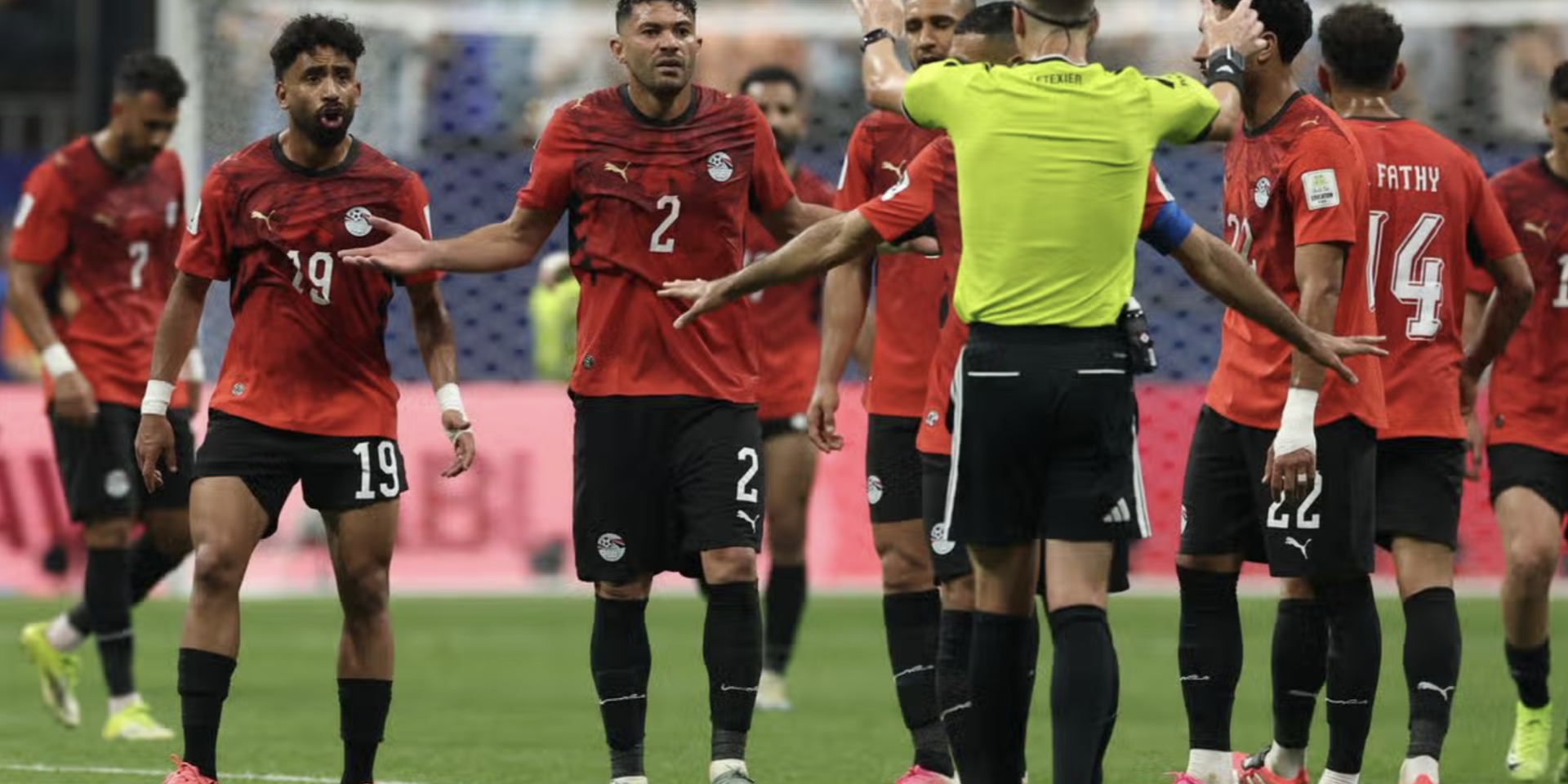

Table of Contents
Mostafa Zico scored one goal, had another ruled out, and walked off the pitch in Atlanta in tears. Asked afterwards whether those tears were for his team’s World Cup elimination or for the refereeing decisions that had gone against Egypt, his answer was simple: both.
For a squad that had led reigning champions Argentina for the best part of an hour, the manner of the exit felt different to a plain defeat, and the federation’s formal response over the following two days has reflected that.
Two days on from Argentina’s 3-2 comeback win in the last 16, Egypt have turned that frustration into an official complaint. The Egyptian FA has filed a formal grievance with FIFA over the officiating in Atlanta and is understood to have called for referee Francois Letexier to be removed from the rest of the tournament, according to Sky Sports News.
A dramatic finish overshadowed by decisions
Played in front of 68,239 fans at Mercedes-Benz Stadium in Atlanta, the match had already produced one of the ties of the round before the final whistle. Yasser Ibrahim headed Egypt in front after 15 minutes, and Messi then missed his second penalty of the tournament, saved by goalkeeper Mostafa Shobeir. Egypt looked to have the tie won when Zico doubled their lead in the 67th minute, only for Argentina to score three times inside the final 13 minutes through Cristian Romero, Messi himself, and finally Fernandez in the second minute of stoppage time.
It is the passage of play building up to that winning goal that has become the centre of Egypt’s complaint. Alexis Mac Allister appeared to pull back Hamdi Fathy inside the area moments before the winning move, with no foul given. Shortly after, Julian Alvarez caught Mohamed Salah on the foot as he won the ball inside the Egypt box, an incident VAR did not check, before the counter-attack that led to Fernandez’s header from Lautaro Martinez’s cross.
Those incidents came after Egypt had already had a goal by Zico disallowed at 1-0 in the 59th minute, following a VAR review that ruled Lisandro Martinez had been fouled by Zico in the build-up. Sky Sports’ own report on the match described that particular decision as correctly given, even as Hassan and Zico voiced frustration afterwards, an example of how differently the same passage of play can be read from opposite sides of a result.
The Egyptian FA said in a statement that it could not remain silent regarding the refereeing decisions, or the failure to make appropriate use of VAR. “Several key incidents raised serious concerns and left profound questions about the consistency and fairness of decisions that directly influenced the course of the game,” it continued, adding that football experts and analysts, both in Egypt and internationally, had highlighted several controversial and influential refereeing incidents over the course of the game, incidents the federation said had shaped the outcome unfairly.
A booking for a gesture, not a protest
The complaint has also drawn attention to a moment late in the game that went beyond the usual run of penalty appeals and disallowed goals. After Argentina’s winner went in, Hassan was booked by Letexier for crossing his arms in front of him, a gesture that is the FIFA-backed signal used by players and coaches to alert a referee to a suspected racist incident. Hassan did not address the gesture directly in his post-match comments, but the booking added another layer to an already tense finish, coming moments after his side had conceded the goal that ended their World Cup.
Egypt’s frustration was sharpened by how close they had come to reaching the quarter-finals. Ibrahim’s early header and Zico’s second-half strike had them 2-0 up and cruising with barely 20 minutes left to play, only for Messi to inspire a fightback his own display had, for long periods, seemed incapable of producing. The Argentina captain had missed his second penalty of the tournament earlier in the game, becoming the first player in World Cup history to fail from the spot twice in the same edition of the competition, before recovering to set up Romero’s goal and then score the equaliser himself. Fernandez’s header, from Lautaro Martinez’s cross, completed the turnaround two minutes into stoppage time.
Fernandez, speaking after the game, credited the mentality of the squad rather than any refereeing assistance for the turnaround. “We have a phenomenal group, a group that never gives up no matter the difficulties,” he said. “Four years have passed now, and we’ve come to enjoy another World Cup, and we want to win it again. That’s what we’re aiming for.”
Zico: “We were hard done by”
While Egypt head coach Hossam Hassan has already been vocal about his frustration with how the match was officiated, it was Zico’s reaction pitchside that captured the raw disappointment inside the Egypt camp. Asked directly about his tears, the forward did not hesitate.
“Both. We were hard done by the referee today, and everyone saw that,” he said. “I won’t talk about something like this. We were winning 2-0. After the 2-0 result, everything went against us and worked against us. I don’t even know why the second goal was disallowed. I don’t see any reason for it. But we must look for a solution so that a second goal doesn’t come. He wanted to disallow the third one too, but thank God, God didn’t grant him success.”
He returned to the same point when pressed further. “The refereeing was obvious in front of everyone. I won’t talk about it, the refereeing was clear. We had a goal disallowed, and we had a penalty. The penalty was turned against us into a counter-attack goal.”
The Egyptian FA’s official position
The federation’s statement went further than individual frustration, casting the complaint as a matter of principle for the tournament as a whole. “Egyptian football has always respected the principles of fair play, sporting integrity, and respect for the game,” it read. “These same principles require that all teams compete on equal terms and receive equal treatment. What occurred has understandably generated widespread frustration among our players, staff, and supporters, who expected the highest standards of officiating on football’s biggest stage.”
Sky Sports News has approached FIFA for comment on the complaint and the call for Letexier to be stood down from any further involvement in the tournament. Egypt’s exit means the French official’s next assignment, if any, would come at the quarter-final stage or later, assuming FIFA does not act on the Egyptian FA’s request before then.
Letexier was entrusted with one of the standout ties of the round of 16, and his removal from the tournament, if FIFA were to act on Egypt’s request, would mark a significant step for a governing body that has so far said nothing publicly about the complaint. Whether FIFA responds at all before the quarter-finals conclude remains to be seen.
Where this leaves Egypt
The complaint lands just as the last eight begin to take shape across four host cities, with FIFA yet to respond publicly to either the removal request or the federation’s wider statement. For Egypt, the immediate concern is simpler than any wider debate about officiating standards: a match they led 2-0 slipped away, and the manner of the exit has left a mark that a plain defeat would not have.
Nothing in the Egyptian FA’s statement or Sky Sports News’ reporting suggests the federation expects the result itself to change. The request is specifically about Letexier’s future involvement in the tournament, not a review of the scoreline from Atlanta, which stands regardless of how FIFA eventually responds to the complaint.
For Argentina, the win sets up a quarter-final against Switzerland that will be played well away from any of the questions Egypt have raised about the officiating in Atlanta. Messi’s fightback has dominated most of the coverage that followed the final whistle. For Egypt’s players and staff, though, the two are inseparable: the same 13 minutes that produced Argentina’s escape are the ones the federation now wants FIFA to examine.
For Zico personally, the disallowed goal, rather than the one that stood, is set to be the abiding memory of his team’s night in Atlanta.
Argentina, for their part, move on to a quarter-final against Switzerland with the controversy unlikely to follow them much further. Whatever FIFA decides in response to Egypt’s complaint, the result in Atlanta stands, and the reigning champions remain in the competition they are defending.
Letexier, for now, remains part of FIFA’s pool of match officials for the remainder of the tournament unless the governing body acts on Egypt’s request. The complaint joins a small but growing list of flashpoints involving officiating decisions at this World Cup, though FIFA has given no indication of how quickly, or how publicly, it intends to respond. For Hassan and his players, the answer could well arrive too late to change how this World Cup is remembered by the players and staff who lived through that final quarter of an hour in Atlanta.

Leave a Comment
More in News

Thierno Barry Was Filmed Crying In A Private Training Session Last Season, And He Has Already Scored In Three Games This Campaign

Gravenberch’s Red Card Sparks Referee Row in Liverpool’s Defeat to City

Moise Kean Will Miss Como’s Biggest Game of the Season After Cesc Fabregas Clashed With Italy’s Doctors

Oliver Glasner Returned to Crystal Palace and Fans Turned From Applause to Taunts as Forest Lost
Vinicius Red Card for Hair Pull Leaves Mourinho Snubbing the Press
Trending on Futbol Chronicle
Why Soccer Is The Best Sport
What Is Offsides in Soccer? The Offside Rule Fully Explained
The Best World Cup YouTubers to Follow in 2026
Arab football federations back Gianni Infantino as FIFA president faces growing opposition