
Fernando Morientes Reveals the Secret Behind Spain’s Run to a Second World Cup Final
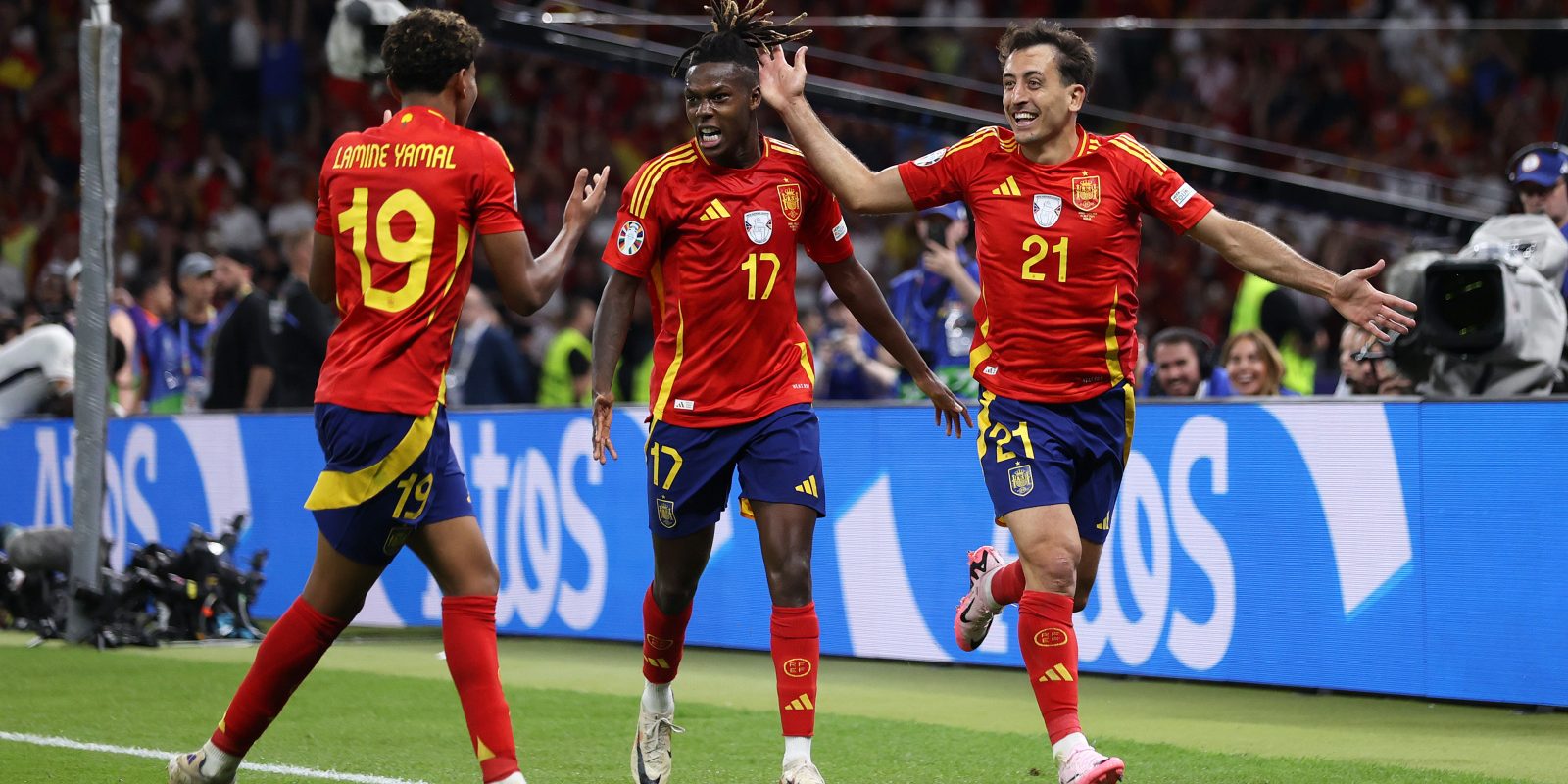

Table of Contents
Spain reached the World Cup final by beating France 2-0 on 14 July, goals from Mikel Oyarzabal and Pedro Porro sealing a second appearance in the tournament’s showpiece match in 16 years. It is a run that started slowly, built through a group stage few outside the Spanish camp found convincing, and has ended with the best defensive record left in the competition. Speaking before the identity of Spain’s final opponent was even confirmed, former international Fernando Morientes explained what he believes is behind all of it, and it has little to do with the talent already on the pitch.
“I think it comes down to the work done in the lower categories. Not just at the federation, though. I’d also bring in the work done in the academies of LaLiga clubs,” Morientes said.
A Run That Now Stretches Back Years
Spain’s win over France sent Luis de la Fuente’s side to a second World Cup final, with the first coming in 2010, when the team beat the Netherlands to lift the trophy for the only time in its history. La Roja have now reached four major finals since 2021, winning the 2023 Nations League and Euro 2024, and finishing runner-up to France in the 2021 Nations League final.
The current run has drawn comparisons to the tiki-taka generation that won the World Cup and two European Championships between 2008 and 2012, a period that turned Xavi, Andres Iniesta and Iker Casillas into the reference points every Spanish player after them has been measured against. Morientes, part of the Spain squad in the years before that golden run began, sees a direct link between what is happening now and the way the country has changed how it develops players in the two decades that followed his own playing days.
Coaching Before Talent
Morientes, a former Real Madrid and Liverpool striker who scored 27 goals in 47 appearances for Spain across a nine-year international career that included two World Cups, was clear that raw ability was never going to be the full explanation on its own.
“There’s also a real emphasis on developing coaches, and I think the coaches themselves are very important in this process with young players,” he said. “It’s not just about having talent, you need good coaches, good coaching staff, to unlock the talent that exists in every young Spanish player.”
He was careful not to claim Spain has a monopoly on young talent. “Obviously France, Portugal and Brazil also have a lot of young talent,” Morientes said. “But I don’t know, in Spain we’ve had this instilled since we were very young.”
Academies Doing What His Generation Didn’t Have
Morientes drew a direct line between the federation’s youth structure and the club academies that feed the national team, arguing that both are now producing results his own generation never had access to in the same way.
“I think the work being done in the lower categories of the Spanish federation, I really value it, and in LaLiga too, because I know how the academies work there,” he said. “I think it’s delivering performances that weren’t worked on the same way in our generation.”
It is a notable admission from a player who scored more than a goal every two games for his country and still finished his career believing the structures now in place would have made him better. Morientes played across two World Cups without ever reaching a final. The generation he is describing has already reached this World Cup final on top of the Euro 2024 title and multiple Nations League finals from 2021 onward.
A Final Opponent He Hadn’t Learned Yet
Morientes gave his comments before England’s semi-final against Argentina had been played, with either nation still able to meet Spain in the final. He made clear he had no strong preference between the two, though one matchup appealed to him for reasons that had nothing to do with who lifted the trophy.
“Obviously I would like for Spain to win and to have a Spain and England final. I wouldn’t mind a Spanish-Argentina final either. But to measure the strengths between the Premier League and LaLiga would be cool,” he said. “There’s always a bit of a competition between the two leagues, as two of the best in the world. So to measure LaLiga against the Premier League in the final would be great.”
Argentina’s stoppage-time win over England in Atlanta settled the question a day later. Spain’s opponent on 19 July is Argentina, not England, and the LaLiga-versus-Premier League comparison Morientes wanted will have to wait for a different stage. He will get a Spain-Argentina final instead, the outcome he said he could live with just as easily.
The Manager Is a Product of the Same System
De la Fuente himself is an example of the coaching investment Morientes describes. A former left-back who spent most of his playing career at Athletic Bilbao, he built his coaching reputation by working through the Spanish federation’s youth pathway rather than arriving from a big club dugout. He won the European Under-19 Championship in 2015 and the European Under-21 Championship in 2019, then took Spain’s Olympic team to a silver medal at the Tokyo Games before being appointed senior head coach in December 2022, replacing Luis Enrique after that year’s World Cup.
It is close to a direct illustration of the point Morientes was making: a federation that spends years developing coaches at every youth level, then hands its senior team to someone who came up through exactly that pipeline rather than importing a name from outside it.
What the Academies Have Actually Produced
The current Spain squad is the clearest evidence for Morientes’ argument. Nico Williams came through Athletic Club’s Lezama academy, arriving as an Under-11 and working his way through the club’s youth ranks before making his first-team debut. Lamine Yamal, still only 19, made his senior Barcelona debut in 2023 at 15 years old, the youngest player in the modern history of the club, and has gone from that debut to a World Cup final inside three years. None of it happened by accident, in Morientes’ telling, and none of it happened without the coaching structure he credits sitting behind it.
Morientes made his comments on behalf of the betting brand Reviant, but the substance of what he said tracked with a broader story Spanish football has been telling about itself from 2008 onward: that a country of Spain’s size does not produce a generation like this by chance, and does not produce a second one either, without deciding as a federation and as a league to keep building the pipeline that made the first one possible.
A Defensive Record Behind the Run
The academy pipeline Morientes describes has produced more than attacking talent. Spain’s Round of 32 win over Austria, a 3-0 result built on two goals from Oyarzabal and one from Porro, doubled as a goalkeeping milestone: Unai Simon broke the World Cup record for the most consecutive minutes without conceding a goal, reaching 519 minutes to pass the previous mark of 517 minutes held by Italy’s Walter Zenga. Spain limited Austria to five shots all match, none of them on target, on the way to that record.
“We knew that today was going to be a difficult game, but we did things well from the start, both on and off the ball,” Porro said after that match. “I saw the Spain team very concentrated from the start. We’re trying to do things as well as possible, and the most important thing is the team keeps competing at a high level.”
Spain went into that Austria match short of options in attack, with Yeremy Pino, Victor Munoz and Nico Williams all sidelined and Fermin Lopez ruled out before the tournament even began. Yamal answered in Williams’ absence, and Alex Baena, filling in for the same injury, supplied the cross that Porro headed in for Spain’s second goal. Depth, not just star quality, kept the run going through a group stage that had otherwise looked ordinary.
One Win From Matching 2010
Spain now has one match left to match its only previous World Cup win. A victory over Argentina in New Jersey would give the country a second title and cement the current generation alongside the one Morientes watched build the platform for it. A loss would still leave a team that reached back-to-back major finals, built a World Cup knockout run on a record-breaking defence, and did it while missing four first-choice attackers before a ball was kicked in the group stage.
Whatever happens on 19 July, the academies Morientes credited will keep producing the next generation regardless of the result. That was his point from the start: the system, not any single match, is what makes Spain likely to be back here again.

Leave a Comment
More in News

Bowen’s Saved Penalty Costs West Ham a Shot at Top Spot

Cole Palmer Missed England’s World Cup Squad This Summer, and His Club Have Just Backed Him With a Deal Running to 2034
Enzo Maresca Insists Manchester City’s Titles Are Not Tainted After the Club Was Found Guilty on 115 Charges
Michael Carrick Lost Two Title Races to Manchester City, and United Fans Now Mark 50 Years Without a Trophy

Jarell Quansah Was Never Liverpool’s Top Academy Prospect, and He Has Already Won Eight England Caps
Trending on Futbol Chronicle
The Best World Cup YouTubers to Follow in 2026
The Best Soccer Players of All Time: The 10 Greatest Ever Ranked
What Is The Club World Cup?
Mikel Arteta backs ‘warrior’ Bruno Guimarães to make Arsenal stronger