Folarin Balogun Predicted the Backlash Before Trump’s Call to FIFA Even Lifted His Red Card
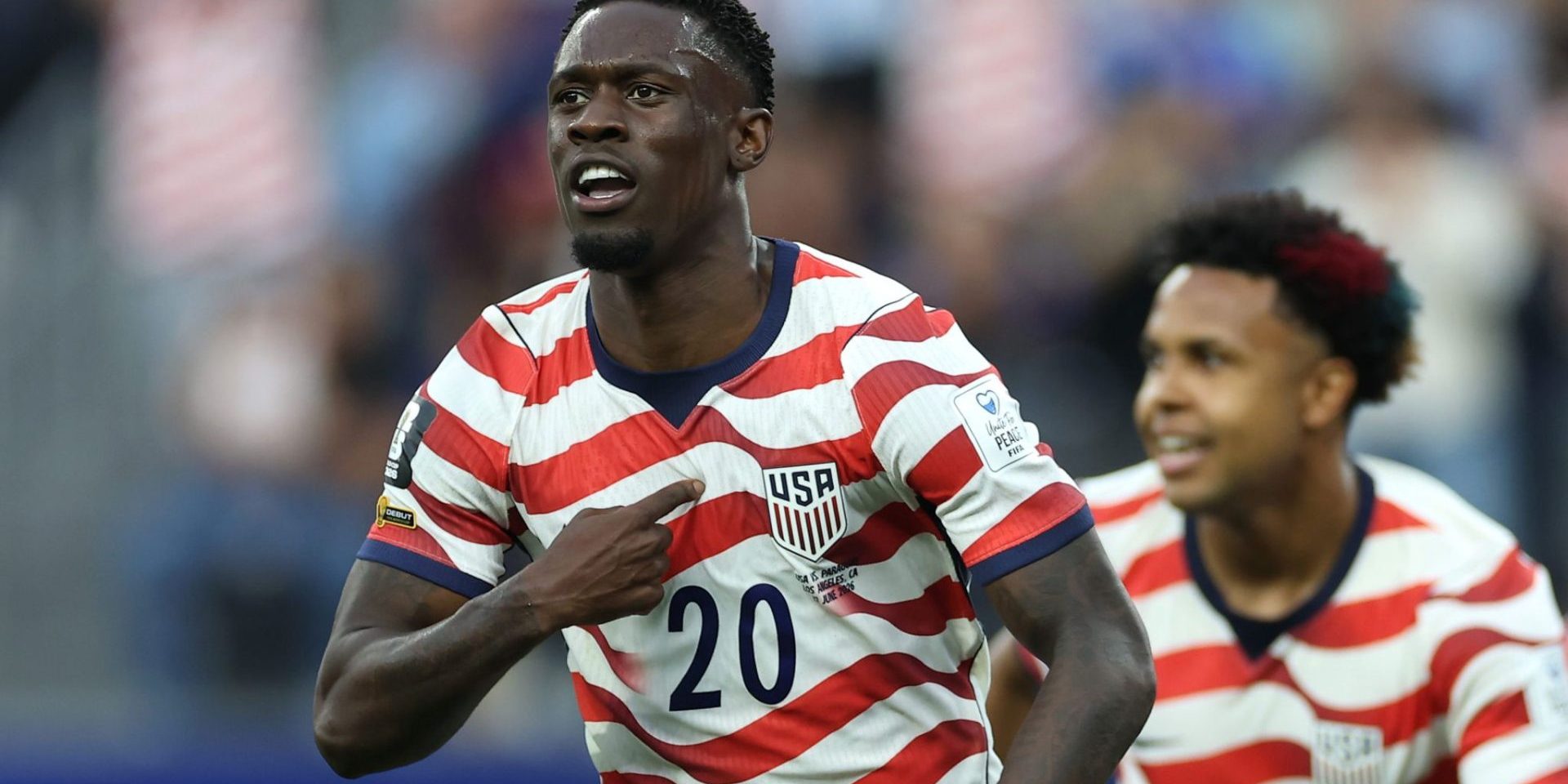
Table of Contents
Folarin Balogun sensed the storm before it broke. Days before the United States met Belgium in the World Cup round of 16, FIFA’s disciplinary committee suspended a one-match ban that should have kept the Monaco forward out of the game, a decision that followed President Donald Trump’s own admission that he had called FIFA president Gianni Infantino about the red card. Balogun was cleared to face Belgium in Seattle. He played, the U.S. lost 1-4, and the tournament ended for the co-hosts regardless. What outlasted the scoreline was the question of how a red card picked up in a round-of-32 win over Bosnia and Herzegovina turned into a live argument about politics inside the world’s biggest football tournament.
Balogun told CBS he understood immediately what was coming. “My initial reaction was I was happy to be back in the team, but when I kind of started to reflect, I knew it was going to cause a lot of controversy,” he said, adding that he could sense nerves spreading through his teammates over a situation so unusual for a World Cup squad to find itself in.
A Red Card That Became a Phone Call
Balogun was sent off in the United States’ round-of-32 win over Bosnia and Herzegovina for a challenge on Tarik Muharemovic. He has never accepted the decision was correct.
“I was in shock. It wasn’t even a tackle. I was totally in shock, I think you could see my reaction, but I just had to accept the decision and just try to be there for my team,” he said.
Rather than serve a one-match suspension, Balogun found his ban suspended for a year by FIFA’s disciplinary committee, a ruling that arrived after the White House made a call to FIFA asking Infantino to review the red card, according to a person familiar with the call who spoke anonymously to the Associated Press. The move meant the Arsenal academy product, who had scored three goals at the tournament, could line up against Belgium in the last 16.
Trump did not stay quiet about his role. He wrote on social media, “Thank you to FIFA for doing what was right, and reversing a great injustice!” A White House social media account reposted the message on X, adding the words “USA-USA-USA.”
Balogun still argues the punishment never fit the offense. “When something’s not intentional it should never be a red card, so it was just an unfortunate situation, and I think it put a lot more pressure on us than we needed,” he said.
Belgium’s Anger and an Echo of the Ronaldo Case
The decision to suspend Balogun’s ban did not sit well with the team he was about to face. The Royal Belgian Football Association said it was “astonished” and would be “investigating all potential options,” adding in a statement that it was acting “to safeguard the legitimate rights of all participating teams and to protect the fundamental principles of fair play in our sport, both at this FIFA World Cup and at future editions of the tournament.”
Belgium head coach Rudi Garcia was pointed in his own reaction. “I didn’t know that in the offices of FIFA the 5th of July was the 1st of April in Europe,” he said. “The Belgian federation does not defend itself, it does not protect the national team. She defends football in general, she defends her integrity, her ethics. I think it’s the first time in the history of the World Cup that there is this kind of decision.” Garcia would not say whether he believed Trump had influenced FIFA’s decision.
FIFA’s intervention was not without precedent. The governing body used the same rule, article 27, to suspend two games of a three-match ban handed to Portugal captain Cristiano Ronaldo the year before, after an elbow on Republic of Ireland’s Dara O’Shea in World Cup qualifying, allowing him to play from the start of this tournament. In Balogun’s case, FIFA said in a statement that “the implementation of the match suspension is suspended for a probationary period of one year,” warning that a similar offense within that period would see the ban enforced. Before FIFA’s ruling, 12 red cards had been issued at the World Cup. Balogun’s was the only one to be suspended.
Outside Noise Balogun Could Not Avoid
Being cleared to play did not mean the story went away. Balogun described the days building up to the Belgium match as difficult to block out.
“But the closer we got to the game I tried to just focus as best as I could, but it was difficult. A lot of outside noise, and that’s hard to avoid,” he said.
The Times has reported that the FIFA disciplinary committee’s chair, Mohammad Al Kamali, made the call to suspend Balogun’s ban alone, something he had never done as the sole arbiter in any previously published disciplinary case. The ruling drew condemnation well beyond the pitch, including from Gary Neville, who called the decision “a stain on FIFA” and did not hold back in his first reaction on ITV. “It absolutely stinks, let’s be really clear,” Neville said. “But what stinks the most is that there should be a review process in place. I actually didn’t think it was a red card but there should be a process that allows it to be overturned. But if there’s no process for it to be overturned and then somehow FIFA, from nowhere, have decided to basically let a player play and the rules are the same for everybody, I’d be absolutely raging if I was Belgium or any other team in the tournament that’s had a player sent off that might think it’s harsh.” Asked if he was surprised by FIFA’s move, Neville said, “No, not with this lot.”
Human rights group FairSquare has gone further, submitting a complaint to the International Olympic Committee alleging that Infantino, an IOC member from 2020 onward, has repeatedly breached the Olympic Charter and the IOC’s code of ethics, and that his handling of the Balogun case is the most recent example. FairSquare’s complaint alleges five clear breaches of the IOC’s rules on political neutrality, along with what it calls prima facie evidence of two further serious breaches.
The pressure on FIFA’s ethics processes has been building from multiple directions. FairSquare lodged a similar complaint with FIFA’s own ethics committee in December, and it says the committee acknowledged receiving it, then gave no further update. The Norwegian football federation wrote to the same committee last month urging it to take up FairSquare’s complaint, and fifty members of the European Parliament wrote a letter on June 29 pressing for the same. The Press Association has contacted the IOC for comment. FIFA declined to comment when approached by Sky Sports News.
For a governing body that spent years building toward hosting this tournament across the United States, Canada and Mexico, having its own disciplinary process become the subject of a formal ethics complaint is an awkward footnote to the first men’s World Cup ever played on American soil. FIFA’s silence when Sky Sports News asked for comment leaves the Balogun case as an open question rather than a closed one, with the IOC complaint now sitting alongside an unanswered one from December.
A Reprieve That Changed Nothing on the Field
For all the argument over whether Balogun should have been on the field at all, his reinstatement did not save the United States’ tournament. Belgium beat the co-hosts 1-4, with the Americans undone by defending well below their own standard in a match many inside the camp had expected to be far tighter.
Balogun played the full match. Whatever difference his presence made in Seattle, it was not enough to keep the co-hosts alive in a tournament they had spent years building toward on home soil. The Monaco forward had been one of the more reliable attacking options available to the United States across the tournament, and his availability for the Belgium game had been treated, before kickoff, as a genuine boost rather than a controversy waiting to unfold.
Instead, the story of the round of 16 became less about the scoreline and more about how a single disciplinary decision, made by one man on FIFA’s committee, had drawn in the White House, the European Parliament, a national football federation and a human rights organization before a ball had even been kicked in Seattle.
A Dispute Without an Ending
Nothing about the Balogun affair has been resolved. FairSquare’s December complaint to FIFA’s ethics committee remains open with no further response. Its new complaint to the IOC accuses Infantino of a pattern of conduct rather than a single lapse. Fifty members of the European Parliament and Norway’s own football federation have now added their names to those asking football’s governing bodies to explain themselves. FIFA, for its part, has offered nothing beyond silence when asked directly.
For Balogun, the episode has become part of how his first World Cup will be remembered, not for a moment on the ball but for a phone call between two of the most powerful men in the sport. He does not sound like a player who enjoyed being at the center of it. He was clear that he never disputed the seriousness of a red card, only whether his challenge on Muharemovic deserved one, and clearer still that he would rather have settled the argument by playing than by watching his name attached to a diplomatic incident.
“It put a lot more pressure on us than we needed,” he said, and for a squad already eliminated, that pressure is now simply a memory attached to a tournament that ended a round short of where the United States hoped to be. The disciplinary committee’s ruling bought Balogun ninety minutes against Belgium. It could not buy the United States a result, and it has left FIFA answering questions about its own neutrality long after the final whistle in Seattle.

Leave a Comment
More in News
Enzo Maresca Insists Manchester City’s Titles Are Not Tainted After the Club Was Found Guilty on 115 Charges
Michael Carrick Lost Two Title Races to Manchester City, and United Fans Now Mark 50 Years Without a Trophy

Jarell Quansah Was Never Liverpool’s Top Academy Prospect, and He Has Already Won Eight England Caps

Vitor Matos Had Just 12 Games of Management Experience, and Now Swansea Lead the Championship

Xavi Simons Enrolled at Harvard While Out Injured, Nine Months After His World Cup Heartbreak
Trending on Futbol Chronicle
The Best Soccer Players of All Time: The 10 Greatest Ever Ranked
Michael Carrick admits Manchester United have “no excuses” after AC Milan defeat
What Is Offsides in Soccer? The Offside Rule Fully Explained
What Is The Club World Cup?