
How Extreme Heat and Three Minute Cooling Breaks Are Reshaping the World Cup
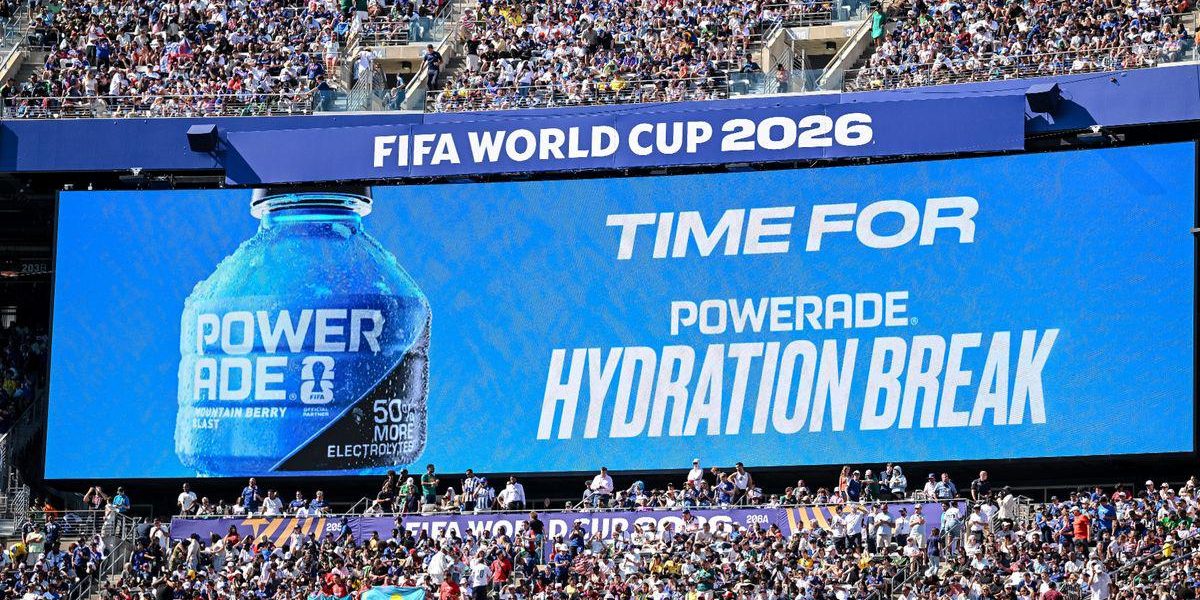
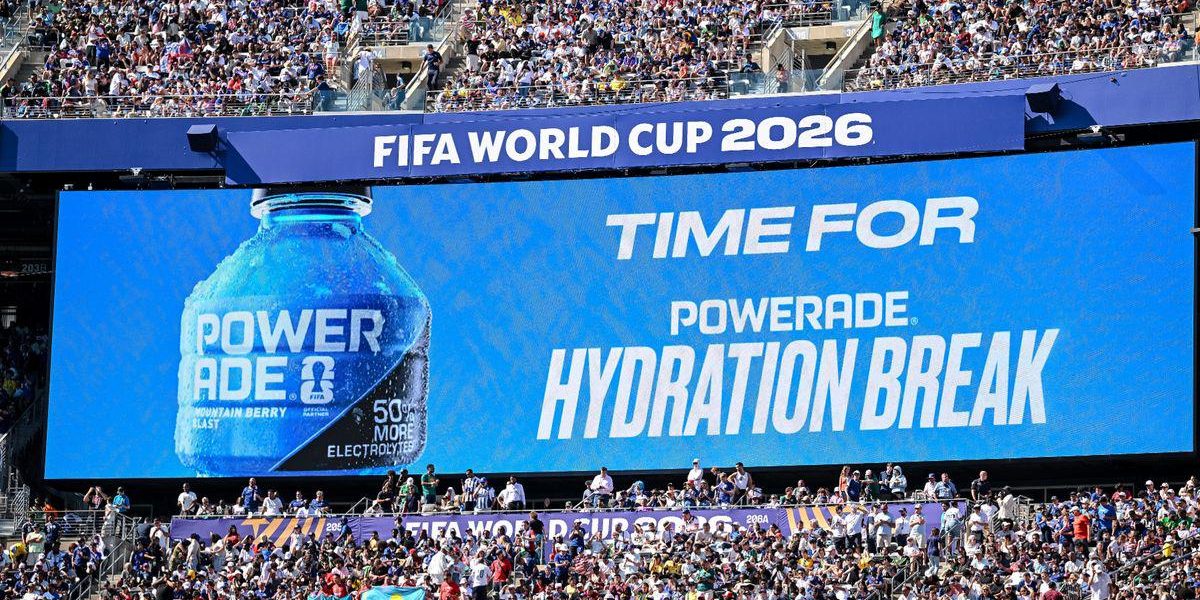
Table of Contents
Somewhere around the 22nd minute of a World Cup match this summer, the action stops. Not for an injury, not for a substitution, but for water. Players jog to the touchline, drape ice towels over their necks and gulp down fluids while the referee waits. Three minutes later, the game restarts. This is the new rhythm of the 2026 World Cup, and it is the clearest sign yet that the tournament is being played in conditions football has never had to take this seriously before.
The 2026 World Cup is the first to mandate cooling breaks midway through each half regardless of temperature or stadium, a structural change to how the game is played at its highest level. Behind the simple idea of a drinks break sits a deadly serious problem. Co-hosted by the United States, Mexico and Canada, this could be the hottest World Cup in the tournament’s history, and the people who run the sport have been forced to react.
The Numbers Behind the Sweat
The scale of the heat threat is not anecdotal. Analysis cited by reporting on the tournament suggests that around 26 of the 104 matches could reach at least 26 degrees Celsius on the Wet Bulb Globe Temperature index, a measure that captures how effectively the human body can actually cool itself rather than just the air temperature. Five games are expected to be played in conditions of 28 degrees WBGT or higher, a level at which the risk to players climbs sharply.
Venues like Dallas, Houston, Miami and several of the Mexican host cities are all prone to extreme heat, and roughly half a dozen of the tournament sites carry serious risk. For players used to European winters and air-conditioned training facilities, the physical demand of competing in that environment is a different sport entirely. The Wet Bulb figure is the one that experts watch, because it accounts for humidity, and humidity is what turns a hot afternoon into a dangerous one.
The medical reality is stark. Athletes competing in heat can sweat between one and two liters an hour, and most drink far less than they lose. Dehydration of as little as two percent of body weight begins to impair physical performance. Push further and the danger escalates fast. When internal body temperature climbs past 40.5 degrees Celsius, players can become confused, aggressive or lose consciousness, the signature warning signs of exertional heat stroke, a condition that demands immediate medical attention.
What a Cooling Break Actually Does
The mechanics are simple. Two breaks per match, one in each half, arriving around the 22-minute mark. Three minutes each. In that window, players replace lost water and salt, lower their skin temperature with ice and shade, and give their bodies a chance to recover before the demands resume. NPR and other outlets have walked through the science, and the consensus is that the breaks help, but only up to a point.
Effectiveness depends entirely on how aggressive the cooling methods are. A player who sips water and stands in the sun gains little. A player who is doused, iced, shaded and properly rehydrated gains a real physiological benefit. The teams that treat these three minutes as a serious recovery protocol, rather than a casual drinks pause, will hold an edge as matches wear on in punishing conditions.
There is a tactical dimension too, and it is reshaping how managers think about games. A cooling break is a free opportunity to gather players, deliver instructions and reset a struggling side. Coaches who once had to wait for halftime to adjust can now intervene twice more per match. For a team riding momentum, the stoppage is an irritation. For a team under siege, it is a lifeline.
The Controversy FIFA Did Not Expect
For something designed to protect players, the cooling breaks have generated a surprising amount of argument. Critics complain that they interrupt the flow of the game, breaking up the natural rhythm that makes football compelling, and that they hand coaches a manufactured chance to shift momentum that the sport never intended to provide. A tight, flowing contest can lose its tension when paused twice for water.
More serious is the scientific pushback. A group of experts co-signed a letter to FIFA in May urging stricter heat guidelines for player safety, arguing among other things that the cooling breaks should be at least six minutes rather than three. Their position is that in truly sizzling conditions, three minutes is simply not long enough to meaningfully cool and rehydrate a body that has been pushed to its limit. The breaks, in this view, are a half-measure dressed up as a solution.
FIFA finds itself caught between competing pressures. Extend the breaks and the matches lose their shape and broadcasters grumble. Keep them short and player welfare advocates argue the protection is inadequate. The governing body has landed on three minutes as a compromise, and like most compromises, it has satisfied almost nobody completely. The debate over whether it goes far enough will follow the tournament to its conclusion.
A Glimpse of Football’s Future
Whatever the arguments about duration, the cooling breaks represent something larger than a single tournament. They are an acknowledgment, written into the laws of the game, that the climate is changing how elite sport must be staged. The 2026 World Cup is being played in conditions that demand intervention, and the measures adopted here will set precedents for the events that follow.
The 2030 World Cup and beyond will inherit these questions, likely in even sharper form. Kickoff times are already being scrutinised, with afternoon slots in the hottest cities under pressure to move later. Stadium design, scheduling, squad rotation and in-game protocols are all being rethought around heat in a way that would have seemed alarmist a decade ago. What looks like a novelty in 2026 may soon be simply how the World Cup works.
For the players, the stakes are immediate and personal. They are the ones whose bodies are being asked to perform in conditions that flirt with the limits of human tolerance. The cooling breaks, imperfect as they are, exist because the alternative, asking athletes to run for ninety minutes in dangerous heat with no relief, became indefensible. The sport is adapting because it has to.
How Teams Are Adapting on the Ground
The smartest teams at this World Cup are not treating the heat as something to endure. They are treating it as a problem to be solved with preparation. Sports science departments have spent months acclimatising players to extreme conditions, using heat chambers, layered clothing during training and carefully managed exposure to build tolerance before the squads ever arrived in North America. The body can adapt to heat over time, and the teams that started early hold an advantage over those that did not.
Hydration strategy has become its own discipline. Players are weighed before and after sessions to calculate exactly how much fluid they lose, and individualised plans replace lost water and electrolytes accordingly. Some squads have brought specialists whose entire focus is keeping core temperatures down, deploying ice vests, cold towels and slushy drinks that cool the body from the inside. The cooling breaks are simply the most visible part of a much larger operation happening behind the scenes.
Squad rotation has taken on new importance too. Asking a player to perform in 28 degrees of Wet Bulb heat takes a heavier toll than a match in mild conditions, and recovery between games is slower. Managers who once named near-identical lineups throughout a tournament are now spreading minutes across larger groups, conscious that fatigue accumulated in the heat can leave a side flat at the worst possible moment. The depth of a squad has become a weapon against the climate itself.
The Players Caught in the Middle
For all the strategy and debate, it is the footballers who absorb the physical cost of these decisions. They are the ones running into the worst of the heat, their bodies pushed toward the limits that the medical warnings describe. Several have spoken about the difficulty of competing in such conditions, the way the legs grow heavy and the mind dulls as a match wears on under a relentless sun. The cooling breaks offer relief, but no break can fully erase the strain of ninety minutes in dangerous warmth.
Player unions and welfare advocates have used the tournament to press their case for stronger protections, arguing that the athletes’ voices should carry more weight in scheduling and protocol decisions. The May letter to FIFA was part of that push, an attempt to ensure that the people most exposed to the risk have a meaningful say in how it is managed. The friction between commercial demands, broadcast schedules and player safety has rarely been so visible.
The outcome of that tension will echo well beyond this summer. If players are seen to suffer visibly, or worse, the pressure for radical change will intensify. If the cooling breaks and acclimatisation strategies are judged to have worked, they will become the template for every hot-weather tournament to come. Either way, the athletes on the pitch are the test case for how elite football confronts a warming planet, and they did not choose to be.
Three Minutes That Tell a Bigger Story
It is easy to glance at a drinks break and see a minor inconvenience, a pause to be endured before the football resumes. Look closer and those three minutes contain the whole tension of a tournament caught between tradition and a warming world. They are a safety measure, a tactical tool and a flashpoint of scientific disagreement, all folded into the same brief stoppage.
The 2026 World Cup will be remembered for its goals, its upsets and its champions, as every tournament is. It should also be remembered as the edition where football formally admitted that the heat had become a player in its own right, one that could not be ignored. The cooling breaks are how the sport is choosing to fight back, and how it manages that fight may shape the World Cup for decades to come.

Leave a Comment
More in News

Moise Kean Will Miss Como’s Biggest Game of the Season After Cesc Fabregas Clashed With Italy’s Doctors

Oliver Glasner Returned to Crystal Palace and Fans Turned From Applause to Taunts as Forest Lost
Vinicius Red Card for Hair Pull Leaves Mourinho Snubbing the Press

Bowen’s Saved Penalty Costs West Ham a Shot at Top Spot

Cole Palmer Missed England’s World Cup Squad This Summer, and His Club Have Just Backed Him With a Deal Running to 2034
Trending on Futbol Chronicle

Michael Carrick admits Manchester United have “no excuses” after AC Milan defeat
Celta Vigo postpones LaLiga opener after fungus outbreak damages stadium pitch
Mikel Arteta backs ‘warrior’ Bruno Guimarães to make Arsenal stronger
Josef Martinez Returns to MLS Spotlight With Columbus Crew Signing