Jude Bellingham Reached Four Major Tournaments Younger Than Any European Before Him
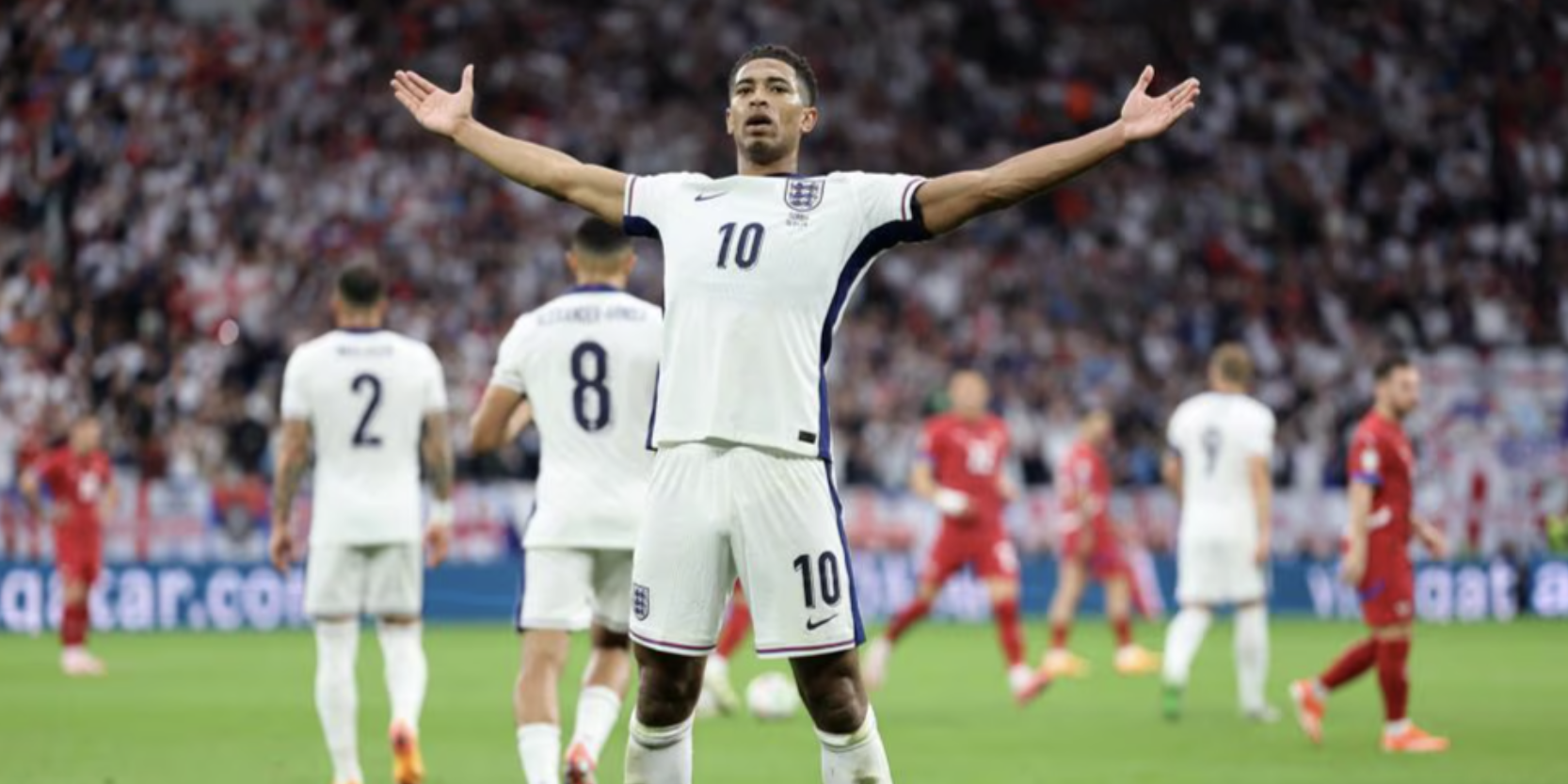
Table of Contents
By the time Jude Bellingham peeled away in celebration after scoring in England’s 4-2 win over Croatia in their World Cup opener, he had already done something no European footballer his age had managed before. At 22, the Real Madrid midfielder had become the youngest player from the continent to feature in four major international tournaments. The goal was almost an afterthought. The record was the statement. And the way he carries himself suggests he is only getting started.
Bellingham arrived in North America as one of the most scrutinised players in Thomas Tuchel’s squad, a footballer whose talent has never been in doubt but whose exact role has been picked over for two years. He answered the questions the only way he knows how, with a performance that mixed goals, defensive graft and the sort of physical dominance that bends a midfield to his will. For England, who have spent a generation trying to turn gifted individuals into a functioning team, Bellingham looks like the rare player who can drag them somewhere they have not been since 1966.
The Record That Reveals the Mileage
The statistic is worth sitting with for a moment. Bellingham has now played at the 2022 World Cup, the 2024 European Championship, and now the 2026 World Cup, having broken into the senior setup as a teenager. Becoming the youngest European to reach four major tournaments is not just a trivia answer. It speaks to how early he was trusted at the highest level and how rarely he has been left out since.
Most players his age are still establishing themselves in their national setups. Bellingham is already a veteran of tournament football, with the scar tissue and the muscle memory that come with it. He knows what a quarter-final feels like. He knows what it is to lose a major final, having been part of the England side beaten in the Euro 2024 showpiece. That experience, banked so young, is a weapon few of his rivals possess.
His club career has only sharpened the edge. Since moving from Borussia Dortmund to Real Madrid, Bellingham has evolved from a box-to-box midfielder into a goalscoring force, a player who arrives in the area with the timing of a striker and the composure of someone who has done it a thousand times. La Liga did not soften him. It taught him to be ruthless.
The Number That Will Not Go Away
For all the brilliance, a debate has trailed Bellingham through this tournament, and it concerns a single shirt number. England have spent months wrestling with where their best midfielder belongs. Is he the number 10, the creative fulcrum operating between the lines? Or is he most dangerous breaking from deeper, attacking space rather than receiving in front of a packed defence?
Sky Sports framed the conversation neatly before the Ghana fixture, noting that Bellingham’s display against Croatia had, for some observers, ended the number 10 discussion entirely. Yet Tuchel’s own review was more measured. The England manager offered a mixed assessment of the performance, enough to leave the door ajar on whether Bellingham is guaranteed that role for the rest of the tournament.
This is the tension at the heart of England’s attack. Bellingham is too good to leave out, but his best position overlaps with the instincts of several other senior players. Tuchel has to build a structure that lets his most influential footballer influence games without unbalancing the side. Get it right and England have a match-winner in their spine. Get it wrong and one of the world’s best midfielders ends up running into traffic.
A Chip on the Shoulder by Design
What separates Bellingham from other prodigiously talented players is not the ability. It is the temperament. He has spoken openly about carrying a “chip on his shoulder” at this World Cup, a phrase that should worry England’s rivals more than any tactical wrinkle. Goal reported the admission and read it as a warning shot. Bellingham plays angry in the most productive sense, feeding off slights real and imagined, turning every doubt into fuel.
That mentality is not an accident. It is cultivated. Bellingham has built a reputation for confrontation on the pitch, for chasing lost causes and for refusing to let opponents settle. Some find it abrasive. Teammates find it galvanising. In a squad that has occasionally been accused of lacking edge in the biggest moments, his refusal to coast is exactly what Tuchel wants radiating through the group.
There is a version of Bellingham’s story where the talent alone carries him. The more interesting version is the one unfolding now, where the talent is married to a competitive streak that borders on the obsessive. He does not appear interested in being merely very good. He wants the tournament to belong to him.
What He Means for England
England’s history at World Cups is a story of near misses and unfulfilled promise, of golden generations that flattered to deceive. The 2026 squad carries the same weight of expectation, and the same nagging fear that it will end the way it always does. Bellingham is the player most likely to rewrite that script, partly because of his output and partly because of what he demands from those around him.
Compare him to the midfielders England have leaned on in tournaments past and the difference is stark. Where previous sides asked their creators to conjure something from nothing, Bellingham generates his own chances, presses with venom and scores the kind of goals that win knockout ties. He is a one-man bridge between defence and attack, a player who makes the team more than the sum of its parts.
The wider significance reaches beyond this summer. England have produced a footballer who is, on current evidence, among the three or four best midfielders on the planet, and he is doing it at 22 with most of his peak still ahead. If England are to finally end the wait, the smart money says it happens with Bellingham at the centre of it, dictating the terms.
From Birmingham to the Bernabeu
The foundations of Bellingham’s fearlessness were laid long before the bright lights of a World Cup. He grew up in Stourbridge in the West Midlands, came through the Birmingham City academy, and made his senior debut at 16 in a Championship side fighting for survival rather than glory. Birmingham retired his number 22 shirt when he left, an extraordinary tribute to a teenager, and a sign that everyone who watched him develop sensed what was coming.
The move to Borussia Dortmund at 17 was the decision that defined his trajectory. Rather than join a Premier League giant and risk being lost in a squad of stars, Bellingham chose a club with a history of trusting young players and a culture that demanded responsibility. He flourished there, becoming a leader in a dressing room of senior internationals while still a teenager. By the time Real Madrid came calling, he was no longer a prospect. He was a finished product arriving at the most demanding club in world football.
That path explains a great deal about the player England now rely on. Bellingham has never taken the easy route, never hidden behind more experienced names, never waited his turn when he believed he was ready. Each step was a deliberate test of his own ceiling. The composure he shows on the World Cup stage is not bravado. It is the product of a career spent seeking out pressure rather than avoiding it.
The Tactical Puzzle He Solves
Beyond the headlines and the records, Bellingham’s value to England lies in the specific problems he solves on the pitch. Modern international football is often a war of compressed space, with defences sitting deep and denying attackers room to operate. Teams that rely solely on possession can find themselves passing in front of a wall, unable to break through. Bellingham offers a different solution. He attacks the space behind defenders with runs from midfield that are almost impossible to track.
This is what makes the number 10 debate more than an abstract argument. Deployed as a pure playmaker, Bellingham receives the ball with his back to goal in congested areas, his greatest threat partially neutralised. Given licence to arrive late from deeper positions, he becomes a second striker who defenders must follow out of shape, opening gaps for England’s wide players and forwards. The role Tuchel chooses for him effectively decides what kind of attacking team England become.
His defensive contribution completes the picture. Few attacking midfielders press with his intensity or cover his ground, and that work allows England to commit players forward without leaving themselves exposed on the counter. He is the rare footballer who improves both phases of the game at once, and in a knockout tournament where balance wins ties, that two-way capacity may be his most underrated asset.
The Road Ahead
As England look toward the knockout rounds, the questions about Bellingham’s position will keep coming, and so will the answers he provides on the pitch. Tuchel will tinker, pundits will debate, and Bellingham will most likely keep doing what he has done at every level, which is rise to whatever the occasion asks of him.
The youngest European to reach four major tournaments is not content with the record. He wants the prize that has eluded England for sixty years, and he has built his entire game around the belief that he can deliver it. For a country that has learned to brace for heartbreak, that conviction is the most valuable thing on the team sheet. The chip on his shoulder, it turns out, might be exactly what England have been missing.

Leave a Comment
More in News

Moise Kean Will Miss Como’s Biggest Game of the Season After Cesc Fabregas Clashed With Italy’s Doctors
Oliver Glasner Returned to Crystal Palace and Fans Turned From Applause to Taunts as Forest Lost
Vinicius Red Card for Hair Pull Leaves Mourinho Snubbing the Press
Bowen’s Saved Penalty Costs West Ham a Shot at Top Spot

Cole Palmer Missed England’s World Cup Squad This Summer, and His Club Have Just Backed Him With a Deal Running to 2034
Trending on Futbol Chronicle

Josef Martinez Returns to MLS Spotlight With Columbus Crew Signing
What Is Offsides in Soccer? The Offside Rule Fully Explained
Arab football federations back Gianni Infantino as FIFA president faces growing opposition
The Best World Cup YouTubers to Follow in 2026