Max Arfsten Was a College Walk On and Now Starts for the United States
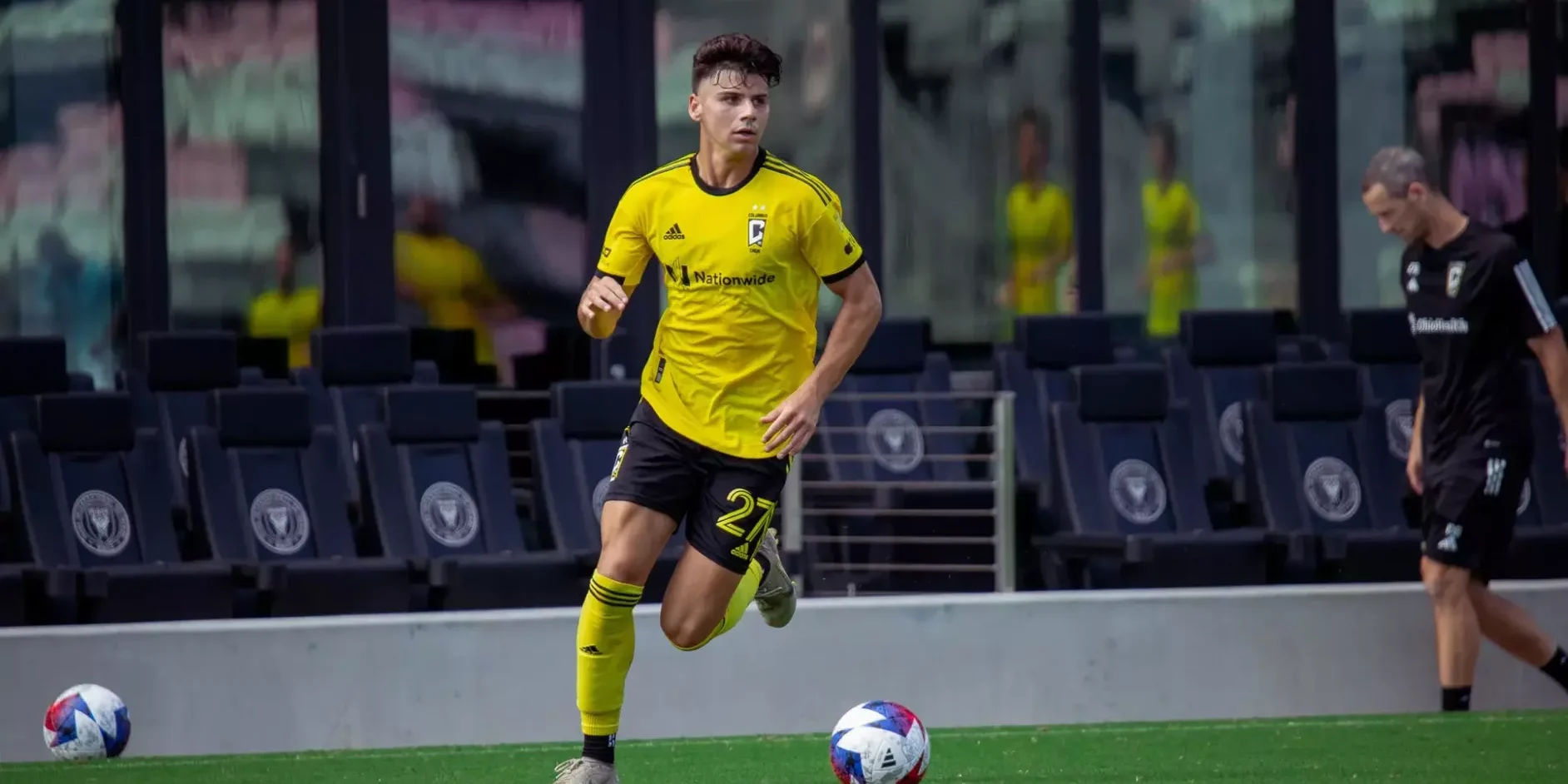

Table of Contents
When the United States kicked off its home World Cup against Paraguay, the man patrolling the left flank had a backstory most of the 70,000 fans in the stadium had no idea about. A few years earlier, Max Arfsten was a walk-on. Not a recruited prospect, not a can’t-miss academy graduate, but a kid from Fresno who showed up to a college program without a scholarship and asked for a chance. Now he was starting at a World Cup, on his own soil, in front of the country he had to talk his way into representing on a soccer field at all.
His own club summed it up in four words when the roster dropped. “Everything in Max’s life has led him to this moment,” the Columbus Crew posted. It is the kind of line that sounds like marketing until you actually trace the path. Arfsten’s road to the World Cup is one of the most improbable on the entire United States roster, and it says a lot about how American players are made.
From Fresno to a walk-on spot
Arfsten grew up in Fresno, California, a city in the agricultural heart of the state that does not exactly funnel players into the national team. He went to UC Davis as a walk-on, meaning he arrived without a scholarship and had to earn one. He did. He played his way into a scholarship and onto the Big West All-Freshman team, the first sign that the gap between him and the recruited players was not as wide as the recruiting rankings suggested.
He later moved on to Cal State Fullerton, continuing a college journey that bore no resemblance to the polished pipelines that produce most modern internationals. There were no European academy contracts at 16, no youth national team camps stacking up on his resume. There was a player who kept being a little better than the level he was placed at, and kept forcing people to move him up.
That is the part of the story that tends to get lost. American soccer loves to celebrate its teenage prodigies, the players who sign abroad before they can legally drink. Arfsten is the counterexample, proof that the college game can still spit out a full international if the player is stubborn enough to keep climbing.
The climb through Major League Soccer
The Columbus Crew selected Arfsten in the MLS SuperDraft, and even then the path was not direct. He began his professional career with the San Jose Earthquakes’ MLS NEXT Pro team, the level below the first team, the place where draft picks either prove themselves or fade out.
He proved himself. Developing under former Columbus head coach Wilfried Nancy, Arfsten broke into the senior side and burst onto the scene in 2024, playing a central role as the Crew won that season’s Leagues Cup. He had already collected an MLS Cup ring in 2023. He kept rising in 2025, earning a spot as an MLS All-Star, and he carried that form into 2026, where he has paced Columbus with a team-best eight goal contributions, four goals and four assists, from his wingback role.
The numbers tell the story of a player who is far more than a defensive specialist. Across 87 MLS appearances he has produced 14 goals and 22 assists, the output of someone who treats the left flank as an attacking lane as much as a defensive one. For a coach building a team to play on the front foot at a home World Cup, that profile is gold.
A national team rise nobody saw coming
If his club career was a steady climb, his international rise was a sprint. Arfsten debuted for the United States in January 2025 and never let go of the shirt. He went on to make a program high 16 appearances during the calendar year and contributed a team-best five assists. Since the start of 2025 he has featured in all but two of the national team’s matches.
He locked down the left side of the defense alongside Fulham’s Antonee Robinson, the player known to teammates as “Jedi,” forming a partnership that gave the United States genuine thrust down that side. By the time the World Cup arrived, Arfsten had 18 caps and a goal to his name, and more importantly he had the trust of a coaching staff that had seen him do it for more than a year.
It is worth pausing on how fast that happened. In January 2025 he was a promising MLS player. By June 2026 he was starting a World Cup match for the host nation. Eighteen months separated those two versions of Max Arfsten, a compression of a career arc that usually takes far longer.
What he brings this summer
The United States opened in Group D alongside Paraguay, Australia and Türkiye, and as co-hosts they automatically qualified, freeing the staff to build rather than scramble through qualifying. The Americans began with a statement, beating Paraguay in their opener, a night we broke down in our report on the co-hosts cruising through their first match.
Arfsten’s role fits the system the staff has built, one that asks fullbacks and wingbacks to do enormous amounts of running and to blur the line between defending and attacking. We dug into the shape itself in our look at why the United States plays with a back four that becomes a back three, and Arfsten is one of the players that flexibility is built around. When the team has the ball, he pushes high and wide. When it does not, he tucks back in. It is exhausting, and it suits a player who has spent his whole career outworking expectations.
The bigger picture
Arfsten’s story lands at an interesting moment for American soccer. The conversation around the national team tends to fixate on the players based in Europe, the ones at Milan and Fulham and beyond. Arfsten is a reminder that Major League Soccer and the American college system can still produce a player good enough to start at a World Cup, and that the unglamorous routes have not closed.
There is something fitting about a walk-on starting a home World Cup. The United States spent decades being told it did not understand the sport, that its players took the easy road, that its system could not develop top talent. A kid from Fresno who paid his own way onto a college roster and clawed up every level after it is a quietly powerful rebuttal to all of that.
Whatever happens across the rest of this tournament, Arfsten has already done the improbable. He has gone from a walk-on with no scholarship to a starter for his country at the biggest event the sport has to offer, played in front of his own people. Everything in his life, as his club said, led to this moment. The remarkable part is how little of it was ever supposed to.

Leave a Comment
More in News
Mourinho Blasts Referee After Atletico Avoid Two Red Cards in Madrid Derby

Cole Palmer Withdraws From England Squad as Gibbs-White Returns Again

Marseille Fans Turn on Owner McCourt as Gomes Can’t Prevent Fifth Straight Loss

Juventus Fans Turn Backs on Silence for Mazzola, Club Slams ‘Lack of Respect’

Trent Alexander-Arnold Returns to the England Squad for the First Time in Over a Year, and Cole Palmer Is Back Too After Their World Cup Snub
Trending on Futbol Chronicle

Map of All the Premier League Teams for 2025/26

The Best World Cup YouTubers to Follow in 2026

What Is Offsides in Soccer? The Offside Rule Fully Explained

What Is The Club World Cup?