Erling Haaland Waited His Whole Career for a World Cup and Dragged Norway to the Last 32
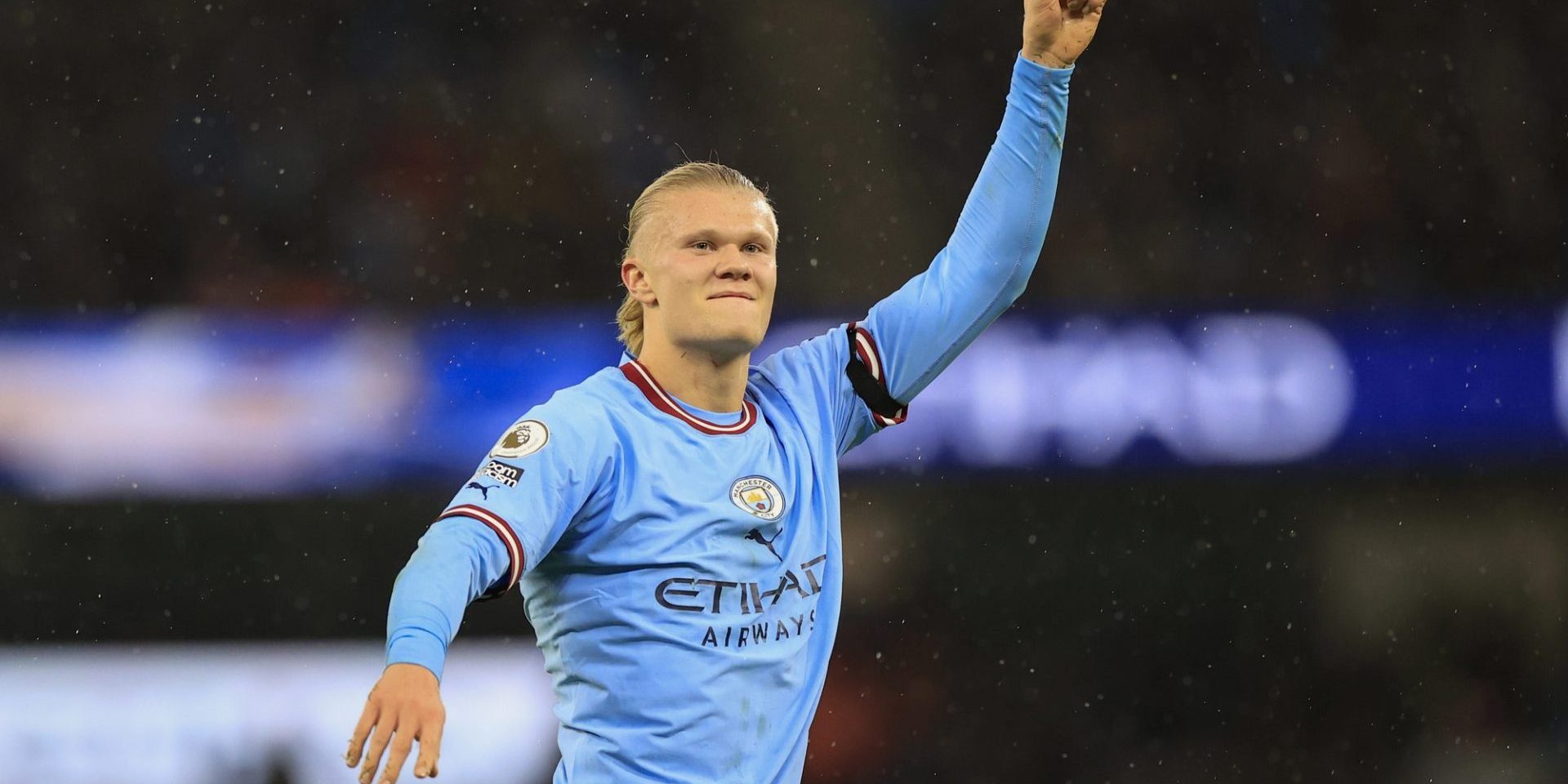
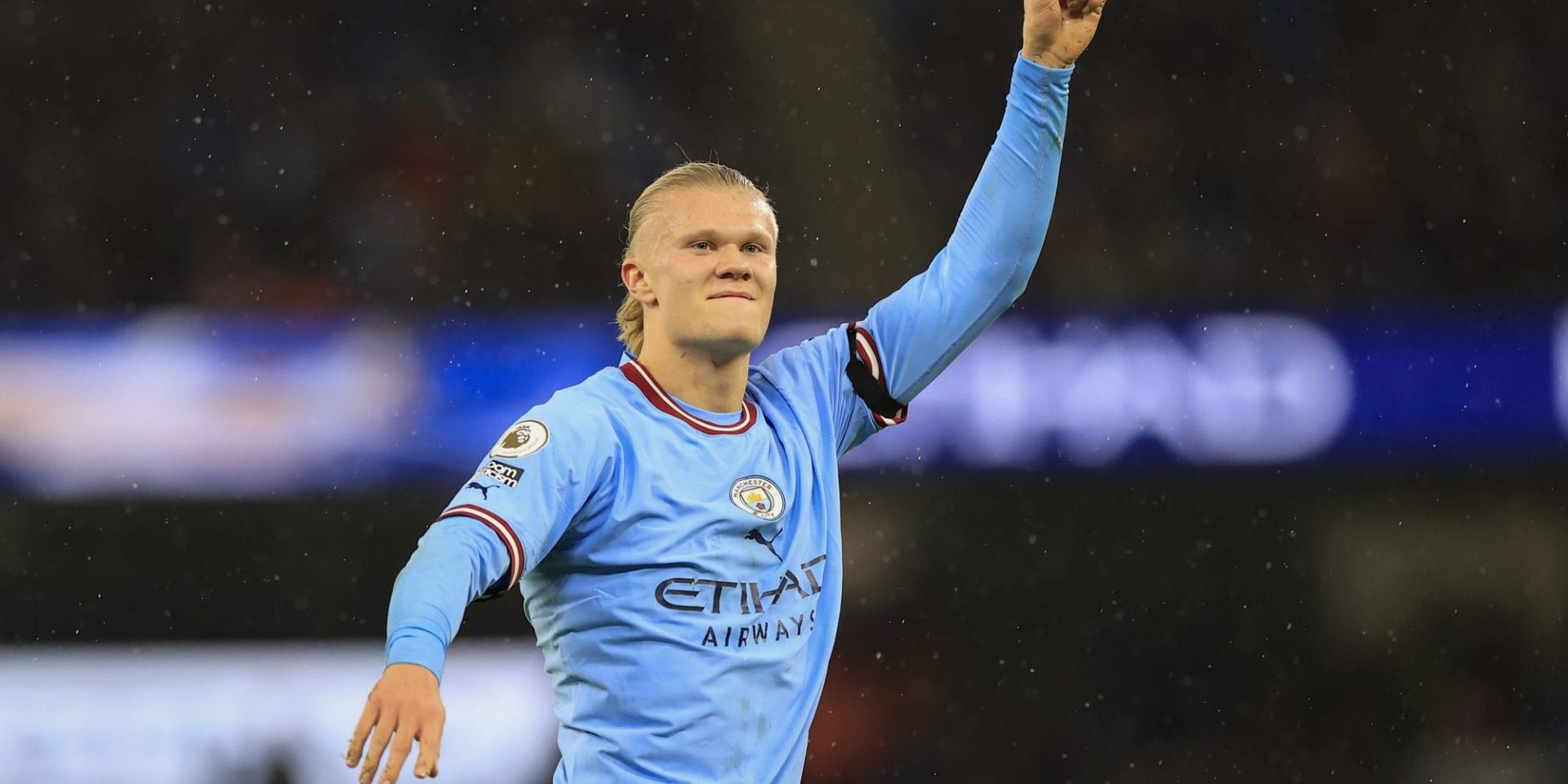
Table of Contents
Erling Haaland has scored goals everywhere football is played. He has filled nets in Norway, Austria, Germany and England, broken records for fun and built a reputation as the most lethal striker of his generation. For all of it, one thing had always been missing, the stage every great player measures himself against. Until this summer, Haaland had never kicked a ball at a World Cup. On a humid night in New Jersey, he made up for lost time with the kind of performance that turns a long wait into a coronation.
Haaland’s brace against Senegal carried Norway to a 3-2 win and into the Round of 32, the country’s first appearance in the World Cup knockout stage since 1998. For a footballer who has spent years watching the tournament from the outside, denied by Norway’s repeated failures to qualify, the moment was heavy with meaning. He did not celebrate like a man ticking a box. He celebrated like a man who had finally arrived where he always belonged.
The Wait That Defined Him
To understand what this means, you have to understand the absence. Haaland made his senior debut for Norway in 2019 and immediately became the focal point of a generation that promised much. Yet Norway kept falling short. They missed the 2022 World Cup. They missed the European Championships. While his contemporaries graced the biggest tournaments, Haaland was left to dominate club football and wonder whether his international career would ever feature the showpiece events.
It became one of the strange subplots of modern football, that a striker scoring at a historic rate for Manchester City had no World Cup or major tournament appearances to his name. Critics used it against him. Supporters ached on his behalf. Haaland mostly let the goals do the talking, but the gap in his record sat there, impossible to ignore.
Norway’s qualification for 2026 changed everything. After more than two decades of near misses and false dawns, the Norwegians finally booked their place at the World Cup, and they did it with Haaland leading the line. For a country whose last knockout appearance came when their current talisman was a toddler, simply being at the tournament was an achievement. Haaland made sure it would not stop there.
Two Goals and a Record
The Senegal match was not comfortable. Marcus Pedersen had given Norway the lead late in the first half, but the contest remained delicately poised. Then Haaland did what Haaland does. He struck twice after the break, punishing sloppy Senegalese defending with the cold efficiency that has become his trademark. Norway survived a late scare to hold on for a 3-2 win that sent them through.
The numbers attached to the performance were staggering. By scoring twice, Haaland became only the sixth player in World Cup history to net multiple goals in each of his first two appearances at the tournament. The names alongside his read like a roll call of the sport’s finest finishers: Argentina’s Guillermo Stabile, Hungary’s Sandor Kocsis, France’s Just Fontaine, Poland’s Grzegorz Lato, and England captain Harry Kane.
To join that list in his first World Cup, at his first attempt, is the kind of statistic that frames a career. Fontaine’s name still carries the aura of legend. Kocsis was part of the greatest team never to win the trophy. For Haaland to insert himself into that company on his tournament debut tells you everything about the scale of his finishing and the size of the occasion he just conquered.
The Realist in the Spotlight
What makes Haaland compelling is the gap between his on-field menace and his off-field bluntness. Asked about Norway’s chances of going deep into the tournament after reaching the knockouts, he refused to indulge in fantasy. “Let’s be realistic,” he said, a phrase that cut against the euphoria of qualification and revealed the cold-eyed competitor underneath.
It was a telling response. Haaland knows exactly what Norway are, a team carried by a generational striker and a few excellent supporting players, but not a side with the depth of the traditional powers. He is not interested in pretending otherwise. The honesty is part of his appeal. He treats his own talent as a tool to be used rather than a story to be sold, and he treats Norway’s position with the same unsentimental clarity.
That mindset may actually serve Norway well in the knockout rounds. A team with no illusions about being favorites can play with freedom. The pressure sits on the giants. Norway, and Haaland, can attack the tournament as the side with nothing to lose and one of the planet’s deadliest finishers leading the charge. Realism, in his hands, becomes a kind of weapon.
Why It Resonates Beyond Norway
Haaland’s breakthrough at the World Cup is more than a national story. It is a moment the wider football world had been waiting for, perhaps without fully realising it. The tournament is meant to gather the best players on the planet, and for years it had been incomplete, missing one of its defining talents because of circumstances beyond his control. His arrival corrects an imbalance that had nagged at the sport.
There is also the matter of legacy. Great players are ultimately measured at World Cups, fairly or not. Diego Maradona, Pele, Zinedine Zidane, all of them have tournament moments that anchor their reputations. Haaland’s club achievements are beyond dispute, but a generation of fans will judge his greatness partly by what he does on this stage. His first two matches suggest he intends to leave no doubt.
For Norway, the significance runs deeper still. A nation of just over five million people has not tasted World Cup knockout football in nearly three decades. An entire generation has grown up without it. Now, led by a striker who treats the impossible as routine, they are back among the last 32, dreaming carefully, the way Haaland insists they should.
The Bryne Boy Who Conquered Europe
Haaland’s story did not begin in the megastadiums where he now scores at will. It began in Bryne, a small town on Norway’s south-western coast, where his father Alf-Inge played for the local club before a professional career in England. The young Erling grew up around the game, kicking a ball in a community of a few thousand people, dreaming the kind of dreams that statistically almost never come true. That he turned them into reality on this scale is part of what makes his rise so compelling.
His club path read like a calculated ascent. From Molde in Norway to Red Bull Salzburg in Austria, where he announced himself to Europe with a hat-trick on his Champions League debut, then to Borussia Dortmund, where he scored at a pace that bordered on the absurd. Manchester City came next, and with them a Premier League goalscoring record in his debut season and a treble that cemented his place among the elite. At every stop, the pattern held. Haaland arrived, Haaland scored, defences adjusted, and still Haaland scored.
What sets him apart is not just the volume but the simplicity. He has stripped the art of finishing down to its essentials, positioning himself where the ball will arrive and dispatching it with minimal fuss. There is little of the elaborate trickery that defines other modern forwards. Instead there is ruthlessness, anticipation and a physical presence that bullies even the best centre-backs. It is finishing reduced to a science, and it travels to any league, any competition and, as Senegal discovered, any World Cup.
What Norway Can Realistically Hope For
Haaland’s call for realism is grounded in an honest assessment of his team. Norway are not a side stacked with world-class talent across every position. Beyond their talisman and a handful of capable performers, they lack the depth that the tournament favorites carry into the knockout rounds. In a one-off match against a major power, that gap can be exposed quickly and brutally.
And yet knockout football has always rewarded teams with a singular weapon and the right attitude. Norway possess arguably the most clinical finisher on the planet, a player capable of deciding a tie with one moment from almost nothing. If they can defend resolutely, stay compact and feed their striker even occasional chances, they become a deeply awkward opponent for sides expected to brush them aside. Tournaments turn on exactly these kinds of upsets.
The freedom that comes with low expectations should not be underestimated either. Norway carry none of the pressure that weighs on the traditional giants, no decades of expectation demanding a deep run, no nation convinced the trophy is its birthright. They can play loose, ride the occasion and let their best player do what he does. Whether it carries them far or not, their first knockout appearance in nearly thirty years is already a triumph, and the man who delivered it knows it.
The Stage He Was Built For
Erling Haaland waited longer than anyone of his ability should have to play at a World Cup. When the chance finally came, he did not waste a second of it. Two matches, four goals, a place in the knockout rounds and a entry into one of the most exclusive lists in the tournament’s history. The wait, it turns out, only sharpened the hunger.
Norway’s road ahead is uncertain, and their talisman would be the first to tell you so. But football has its talent on its biggest stage at last, and the player who spent years on the outside looking in is now writing the chapter he was always meant to write. For Haaland, and for everyone who wondered whether this moment would ever come, the answer arrived on a sweltering night, twice, in the back of the Senegalese net.

Leave a Comment
More in News

Thierno Barry Was Filmed Crying In A Private Training Session Last Season, And He Has Already Scored In Three Games This Campaign
Gravenberch’s Red Card Sparks Referee Row in Liverpool’s Defeat to City

Moise Kean Will Miss Como’s Biggest Game of the Season After Cesc Fabregas Clashed With Italy’s Doctors
Oliver Glasner Returned to Crystal Palace and Fans Turned From Applause to Taunts as Forest Lost
Vinicius Red Card for Hair Pull Leaves Mourinho Snubbing the Press
Trending on Futbol Chronicle
What Is Offsides in Soccer? The Offside Rule Fully Explained
Arab football federations back Gianni Infantino as FIFA president faces growing opposition
Michael Carrick admits Manchester United have “no excuses” after AC Milan defeat
Michael Carrick points to lack of sharpness after Manchester United draw with West Ham