
One Ankle Injury Cost Johnny Cardoso the Home World Cup He Spent His Life Chasing
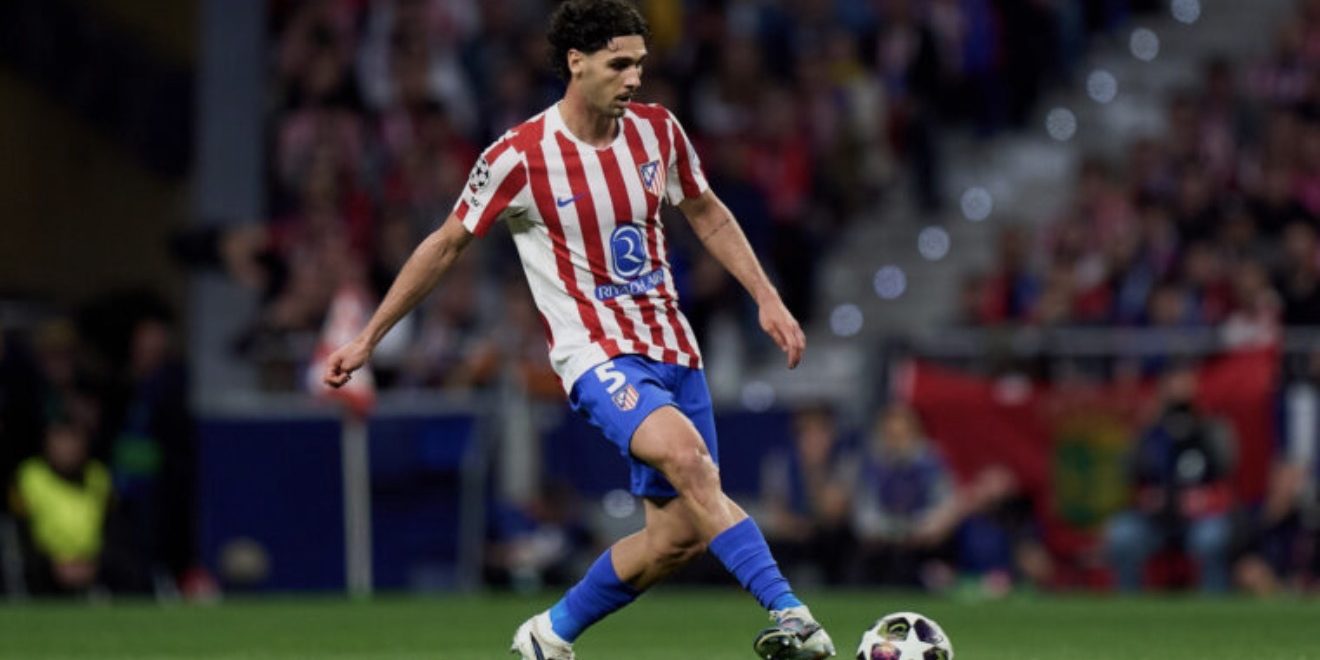

Table of Contents
In late April, Johnny Cardoso walked off the field having become the third American in history to start a Champions League semifinal. He was 24, anchoring the midfield of Atletico Madrid, one of the most demanding clubs in European football, and the timing felt almost scripted. A breakout season in Spain, a place locked down in Mauricio Pochettino’s plans, and a home World Cup waiting at the end of it. The New Jersey-born midfielder who grew up in Brazil was about to play the tournament of his life in the country of his birth. Then, weeks before the squad was finalized, Atletico released a statement no American soccer fan wanted to read. Cardoso would undergo surgery on a high-grade right ankle sprain. His World Cup was over before it began.
Born in New Jersey, Made in Brazil
Cardoso’s story has always been a question of where home is. He was born in New Jersey to Brazilian parents, and the family moved back to Brazil while he was still a baby. He grew up in Porto Alegre, a soccer-mad city in the south of the country, immersed in the Brazilian game from the moment he could walk. There was nothing American about his soccer education. He learned the sport on Brazilian fields, in Brazilian academies, speaking Portuguese, dreaming the dreams that every kid in that part of the world dreams.
He made his professional debut at 18 for SC Internacional, one of Porto Alegre’s two giant clubs, holding his own in a league that produces and exports midfielders by the dozen. For a player of his background, the natural pull was toward the country that had raised him. Brazil could have come calling. Instead, in November 2020, Cardoso accepted a call-up from the United States, the nation on his passport but not, until then, in his daily life.
That choice was not as simple as ticking a box. It meant committing to a national team he had no childhood memory of supporting, learning the rhythms of a soccer culture he had never lived inside, and convincing American coaches and fans that a kid raised in Brazil could be one of theirs. Cardoso did it by playing, not by talking. His game carried an unmistakable Brazilian fingerprint, the comfort on the ball under pressure, the ability to receive in tight spaces and turn out of trouble, the calm that comes from a footballing education built on technique first.
The Rise Through Spain’s Toughest Test
At 22, Cardoso made the move that announced his ambition, leaving Brazil for Real Betis in Spain’s top flight. LaLiga is a midfielder’s proving ground, a league that rewards positional intelligence and punishes anyone who cannot keep the ball under sustained pressure. Cardoso adapted quickly, becoming a regular for Betis and building a reputation as one of the most promising young defensive midfielders in the division. He broke up play, recycled possession, and grew into the kind of player bigger clubs monitor.
That monitoring turned into a transfer in July, when Atletico Madrid signed him ahead of the 2025-26 season. Atletico, under Diego Simeone, is one of the most intense environments in the sport, a club where the midfield is asked to run, press, and suffer for ninety minutes and then do it again three days later. Cardoso did not just survive that step up. He thrived in it, earning Simeone’s trust and forcing his way into the team for the biggest nights of the European calendar.
The peak came in the Champions League knockout rounds. Cardoso helped Atletico into the semifinals and started the tie, becoming only the third American ever to start a semifinal in club football’s premier competition. For an American midfielder, that is rarefied territory. It placed him in a conversation that, until recently, American players were rarely part of, the conversation about who can be trusted on the very biggest stages against the very best opposition.
One Injury, One Lost Summer
Everything pointed toward a World Cup in which Cardoso would be central. A holding midfielder in his form, playing regularly at the highest club level, is exactly the kind of player Pochettino needs to give the United States control in the middle of the field. The American midfield has talent but not always balance, and Cardoso’s profile, the disciplined anchor who lets others push forward, addressed a specific need. He was not a luxury pick. He was a piece the team was built to use.
Then came the ankle. Atletico confirmed that Cardoso had suffered a high-grade sprain serious enough to require surgery, ruling him out for an extended period and ending any hope of involvement in the tournament. There was no dramatic collision to point to, no single moment that fans could replay and curse. There was only the quiet, brutal arithmetic of timing. The injury arrived in the exact window that turned a defining summer into a lost one.
For a player who had spent his life proving he belonged, first to American coaches who had never seen him play in person, then to LaLiga, then to one of Europe’s hardest clubs, the cruelty was not in being doubted. It was in being denied. Cardoso had answered every question asked of him on the field. The one thing he could not answer was an ankle that gave way at the worst possible moment.
What the United States Lost
The absence reshapes how the United States can play. Without Cardoso, Pochettino leans more heavily on Tyler Adams and Weston McKennie to provide the engine, both excellent players but neither an exact replacement for the controlled, possession-minded screen Cardoso offers. The American 2-0 win over Australia, which clinched their group and a place in the knockout rounds, showed a team capable of winning without its injured contributors. It also showed a midfield that has to work harder to find the control that Cardoso provided almost by default.
There is a broader point about American soccer hidden inside Cardoso’s misfortune. A generation ago, the idea of a United States international starting a Champions League semifinal for a club of Atletico’s stature would have seemed fanciful. Cardoso, along with players forged in Europe’s elite academies and first teams, represents how far the talent pool has come. The depth that let the United States advance without him is itself a sign of progress. That depth is small comfort to the player watching from a rehabilitation room while the tournament he was built for unfolds in his backyard.
Cardoso is 24, which means the math is not as merciless as it feels right now. The 2030 World Cup is four years away, and a midfielder of his type tends to get better deep into his twenties, when reading the game counts as much as covering ground. He will be back at Atletico, back in the Champions League, back in the conversations about the best American players in the world. But there is only one World Cup on home soil, only one summer when the tournament comes to the country he was born in, and Johnny Cardoso will spend it watching. Some injuries cost a player a few weeks. This one cost him a moment that will never come again.

Leave a Comment
More in News

Nottingham Forest Agree £22m Deal to Reunite Daniel Munoz With Oliver Glasner

Moyes Says Everton Supporters Are Not Wrong to Fear Losing Harrison Armstrong

Iraola Faces Alexander Isak Puzzle as Liverpool Search for Their First Win

De Zerbi Admits Finding the Right Mentality Is Tottenham’s Biggest Challenge

Emiliano Martinez Closes In On Chelsea Move After Robert Sanchez Error
Trending on Futbol Chronicle
Michael Carrick admits Manchester United have “no excuses” after AC Milan defeat
What Is Offsides in Soccer? The Offside Rule Fully Explained
Why Soccer Is The Best Sport
Josef Martinez Returns to MLS Spotlight With Columbus Crew Signing