
Eberechi Eze Was Released by Six Clubs Before Becoming England’s World Cup Number Ten
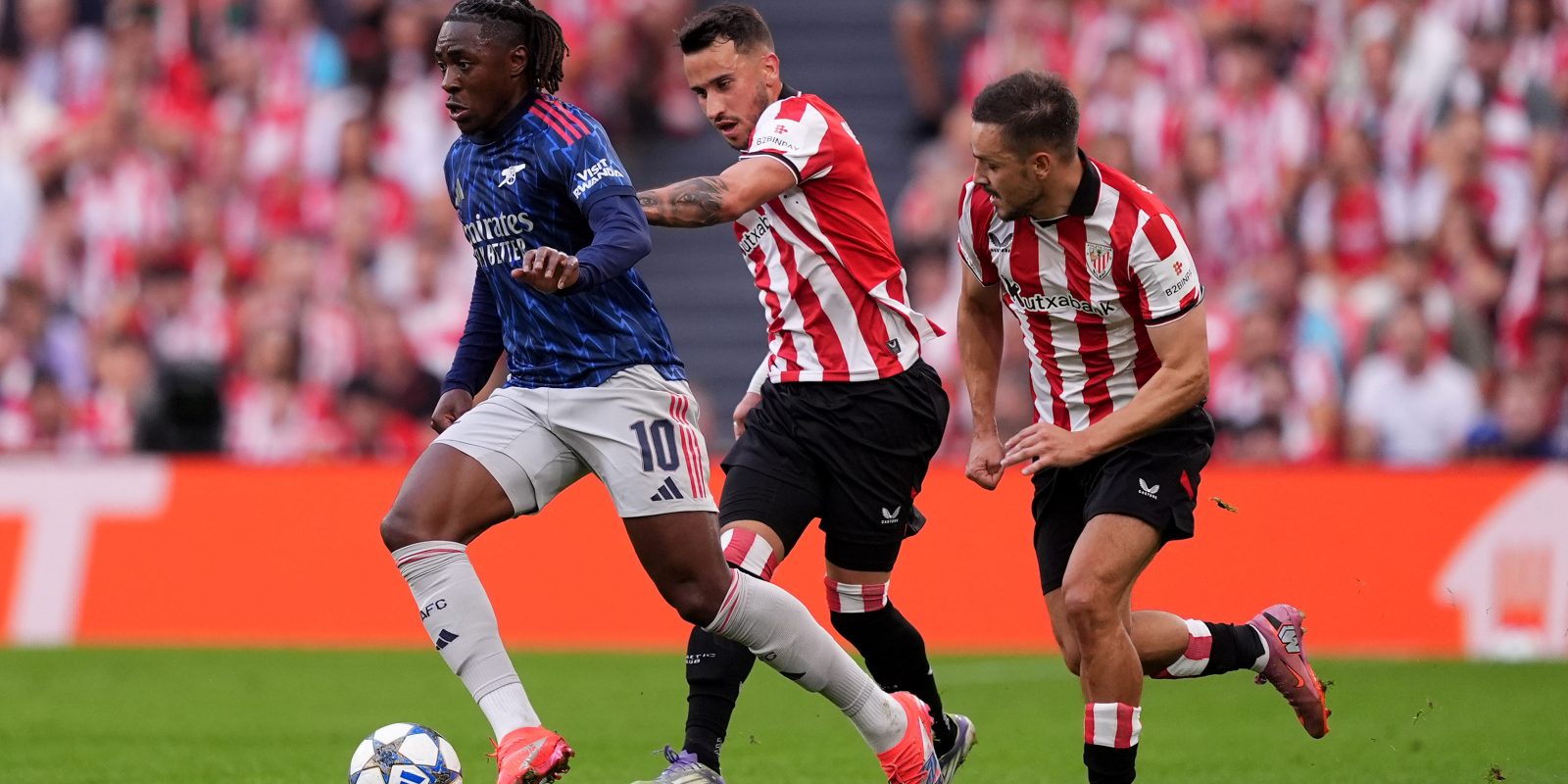

Table of Contents
He cried for a week. A thirteen-year-old boy sitting in a south London bedroom, grieving a football club the way you grieve a person. Arsenal had released Eberechi Eze, and in his own words he felt like he had lost a part of who he was. On Wednesday, eight years on from those tears, Eze is set to walk out at AT&T Stadium in Arlington wearing the number ten shirt for England, the player Thomas Tuchel is trusting to prise open Croatia in the World Cup opener.
The line between that boy and this man is anything but straight. It runs through six club rejections, a set of bunk beds shared with his brothers, trials that ended in silence, and more nights of quiet doubt than any showreel will ever admit to. England have plenty of players who were marked out as special at fifteen and never had to wonder. Eze is not one of them. His place at this World Cup was earned the slow way, the hard way, by a footballer nobody wanted often enough that he learned to want it more than anyone.
The Arsenal Boy Who Was Told He Was Not Good Enough
Eze grew up in Greenwich, the youngest of four, playing cage football on south London estates with a ball that rarely left his feet. Arsenal spotted him early and he joined their academy as a child. Then, at thirteen, they let him go. The decision landed like a bereavement. “I cried for a week,” Eze later told the Premier League. “Saying goodbye to Arsenal, I felt like I had lost a big part of my identity.”
The rejections kept coming. He had two years at Fulham before being released, and the moment that stuck with him was a youth game against the club that had first cut him. “After the match, speaking to the academy director, I was wiping away the tears,” he recalled. “He was saying something to me and I was crying, crying because of how much Arsenal meant to me.” Reading came next and ended without a contract. Millwall took him for two years and in 2016 decided not to offer him a professional deal either. Trials at Sunderland and Bristol City came to nothing.
By then Eze was a teenager with a CV full of polite goodbyes. He has described lying on the bunk beds he shared with his brothers and praying for the break that would not come. “I remember getting home, lying on bunk beds with my brothers and praying, please give me a pro contract, I know I can do it. Then I got the news I had not got it. I remember the deflation.” What separated him, by his own account, was not the absence of pain but what he did with it. The question was never why me. It was always, in his words, what is next.
QPR Gave Him One More Chance
The answer arrived in the unglamorous shape of Queens Park Rangers, who handed the midfielder a scholarship when the bigger names had stopped calling. To toughen him up, QPR loaned him to Wycombe Wanderers in League Two, where the football was physical, direct and a long way from the cage. It was exactly the education a slight, technical playmaker needed. He learned to survive contact, to influence ugly games, to matter when the pitch was a mess.
By 2018 he was a first-team regular at Loftus Road, and his dribbling, the low centre of gravity and the ability to glide past defenders in tight spaces, began to draw crowds. In 2020 Crystal Palace paid around 17 million pounds to take him to the Premier League. At Selhurst Park he became a genuine star, a player supporters bought shirts for, the rare flair option who delivered end product to match the trickery. The crowning moment came in May 2025, when Eze scored the only goal as Palace beat Manchester City to win the FA Cup, the first major trophy in the club’s history.
The Club That Released Him Brought Him Home
Then came the twist that no scriptwriter would dare. In the summer of 2025, with a move to Tottenham all but agreed, Arsenal swept in late and hijacked the deal, paying a fee reported in the region of 60 million pounds to sign him. The club that had decided a thirteen-year-old was not good enough now wanted him badly enough to gatecrash a rival’s transfer. Eze went home, and he did not waste the homecoming. In his debut season in north London he was rewarded with a Premier League winner’s medal, ending the campaign as a champion of England with the badge he had cried over as a boy.
There is a neat symmetry to it that Eze himself tends to wave away. He talks less about destiny and more about work, about the people who kept faith, about a family that never let him believe the rejections were the verdict. But the symbolism is hard to ignore. Few players get to be told they are not wanted by a club and then return to win the title for it.
Tuchel’s Number Ten
Which brings us to Arlington, and to the gap Thomas Tuchel needs Eze to fill. When England’s head coach named his 26, he left out Cole Palmer, Phil Foden and Morgan Gibbs-White, a ruthless set of calls that stripped the squad of several natural number tens. The vacancy at the tip of England’s midfield is real, and Eze has emerged as the man in pole position to start the opener against Croatia. Tuchel has been warm in public about his Arsenal contingent, and Eze’s blend of close control, set-piece threat and late arrivals into the box gives England something different from the orthodox options around him.
Croatia are the ideal first test of what he offers. Luka Modric and Mateo Kovacic still run the Croatian midfield, and England will need a player who can receive the ball under pressure, turn, and commit defenders one on one. That is Eze’s whole game. The boy who learned to keep the ball in a Wycombe relegation scrap and the man who scored an FA Cup final winner against Pep Guardiola are the same footballer, and both qualities are exactly what a tournament knockout campaign demands.
Why the Story Travels
Eze’s rise lands so hard because it exposes how brutal and how fallible the English academy machine can be. Thousands of boys are signed by professional clubs and the overwhelming majority are released before they ever earn a living from the game. Most of those goodbyes are final. The system is built to discard, and the players it discards rarely get a second hearing, let alone a sixth. Eze is the exception who proves the rule, the reminder that talent and readiness do not always arrive on the timetable scouts demand.
For every young player sitting where Eze once sat, on the wrong side of a release letter, his career is the most useful kind of evidence. Not the fairytale version, where belief alone carries you through, but the grittier one, where rejection is real and repeated and you keep turning up anyway. He was not spared the doubt. He simply refused to let it be the last word.
So when England line up against Croatia and the number ten takes his first touch, it is worth remembering the thirteen-year-old who cried for a week. He did not lose his identity when Arsenal let him go. He spent the next decade building a better one, and now he wears it on the biggest stage the sport has to offer.
The Late Bloomer Tuchel Trusts
Eze’s England story has moved almost as quickly as his club one. He was a relative latecomer to the senior squad, capped for the first time in his twenties rather than ushered in as a teenage certainty, and even then he had to wait his turn behind a generation of attacking midfielders England seemed to produce on a conveyor belt. The Euro 2024 campaign saw him used sparingly. What changed was form and ruthlessness, his at club level and Tuchel’s in selection. The head coach decided he would rather build around a player in the best run of his career than reputation, and Eze was the beneficiary.
That decision speaks to something Tuchel values. England’s coach has spoken often about wanting players who can manufacture a moment when a match is locked, and Eze is one of the few in the squad who can beat a man from a standing start and shift the geometry of a defence on his own. Set pieces add another layer. He is a genuine dead-ball threat from the edge of the area, the kind of detail that decides tight knockout games where one delivery can settle ninety taut minutes.
There is also the matter of temperament. A player who has been released six times and kept going is unlikely to be cowed by the noise of a World Cup. The setbacks that might have broken a softer character became, in Eze’s case, a kind of armour. He has described his faith and his family as the constants that held him steady through the rejections, and that grounding is exactly what a manager wants in someone he is asking to carry creative responsibility in the heat of a tournament.
If England are to end six decades without a men’s World Cup, they will need their flair players to deliver when the pressure is heaviest. Eze has spent his whole life delivering precisely when it would have been easier to fold. Few players in Tuchel’s squad understand better what it means to be doubted, and few will be more determined to make the doubters wrong one more time.

Leave a Comment
More in News

Trent Alexander-Arnold Returns to the England Squad for the First Time in Over a Year, and Cole Palmer Is Back Too After Their World Cup Snub

Gabriel’s Boot Caught Emiliano Martinez in the Head, and a Five-Person Premier League Panel Ruled It Was Never a Red Card

Floyd Samba Scores a Debut Double as a Teenager

Tottenham Spent £300m This Summer and Have Not Scored in Four Premier League Games for the First Time in the Club’s 144-Year History

Cyle Larin Scored Once in 15 Games on a Failed Feyenoord Loan, and Is Now Outscoring Kylian Mbappe and Erling Haaland at Southampton
Trending on Futbol Chronicle

Michael Carrick admits Manchester United have “no excuses” after AC Milan defeat

What Is The Club World Cup?
Celta Vigo postpones LaLiga opener after fungus outbreak damages stadium pitch
Cristian Romero completes €40m move from Tottenham to Atlético Madrid