South Africa Reached a World Cup Knockout Round for the First Time in Their History
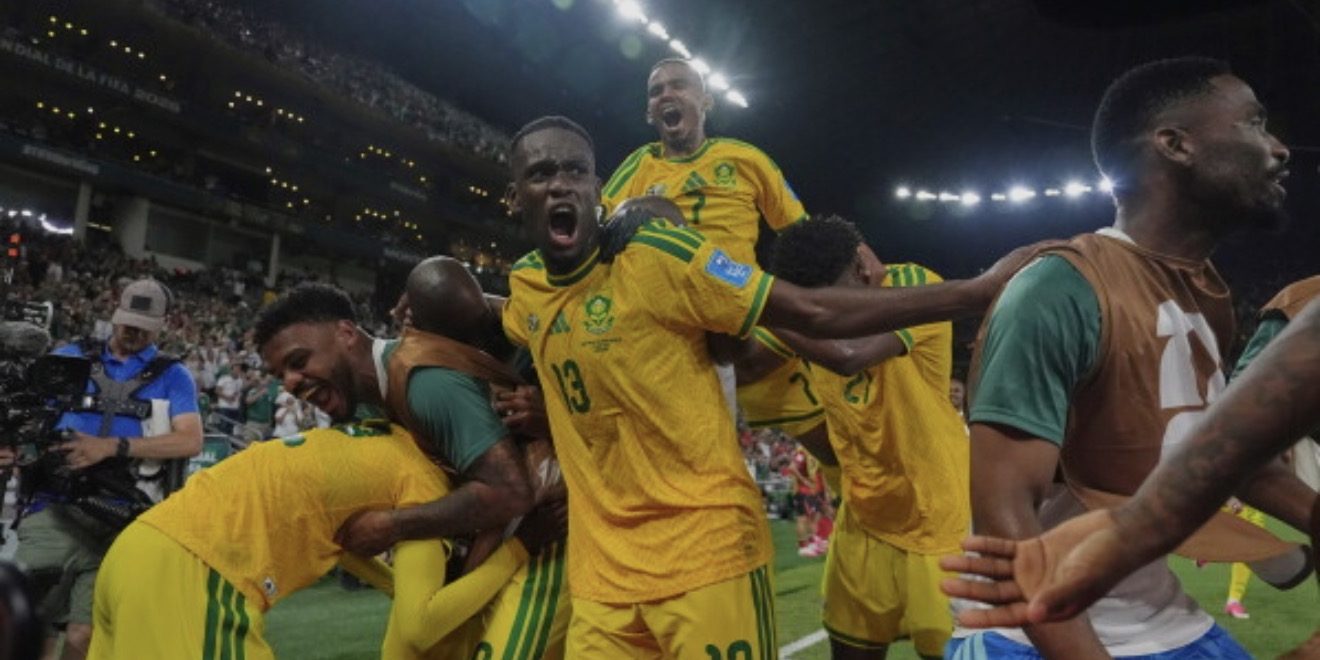

Table of Contents
For 16 years, since they walked out as hosts in 2010, South Africa had carried a quiet ache. Three World Cup appearances, not a single knockout match to show for them. The 2010 tournament, played on home soil to a soundtrack of vuvuzelas, had ended in the group stage despite a famous opening-day goal, and the disappointment had calcified into something close to a national complex. Then, on 25 June in Mexico, a 22-year-old named Thapelo Maseko ran onto a loose ball, struck it past the South Korea goalkeeper in the 63rd minute, and ended the wait. Bafana Bafana were through to the round of 32 for the first time in their history, and a coach who had spent weeks being shouted at finally had his answer.
The goal that changed everything
The match itself was tense, low on chances, and heavy with consequence. South Africa needed a result against South Korea to be sure of progressing from Group A, a group that also contained co-hosts Mexico and a dangerous Czechia side. When Maseko’s strike found the net just after the hour mark, it did more than win a game. It rewrote the record books for a footballing nation that had given the world so much joy in 2010 and so little to celebrate on the pitch.
South Africa finished second in the group behind Mexico, enough to book a place in the knockout rounds. In doing so they became the seventh African nation to reach the World Cup’s knockout stage, joining a select group on the continent. For a side that had been written off after losing their opening match 2-0 to Mexico, the turnaround was striking. They steadied, they organised, and when the decisive moment came, a young forward seized it.
Hugo Broos and the big mouths
No one enjoyed the moment more than Hugo Broos. The veteran Belgian coach, who lifted the Africa Cup of Nations with Cameroon in 2017, had endured a torrid few weeks. After the opening defeat to Mexico, in which he set up his team to defend and absorb pressure, the criticism back home had been fierce. Pundits questioned his tactics, his caution, his selections. Broos, never a man to swallow his words, told the critics to “shut up” before the second match. It was a hostage to fortune, and he knew it.
When the final whistle blew against South Korea, Broos had been vindicated in the most public way possible. “We gave an answer to all those big mouths,” he said afterwards, the satisfaction unmistakable. There was emotion in his words too. “We came here to Mexico and we wanted to survive the group stage, and that for me was really a moment of emotions,” he reflected, noting that this was probably one of the last tournaments of a long career. For a coach in the twilight of his time in the game, leading South Africa to a historic first was a fitting reward for the conviction he had refused to abandon.
Broos had backed his methods even as the noise grew. His South Africa side is built on organisation, defensive discipline, and the kind of collective work rate that papers over a lack of star power. It is not always pretty, and the opening loss to Mexico gave his detractors plenty of ammunition. But tournament football rewards teams that defend well and take their chances, and Bafana Bafana did exactly that when it counted.
A nation that waited
To understand what this means in South Africa, you have to understand the weight of what came before. The country returned to international football in the 1990s after the end of apartheid isolation, won the Africa Cup of Nations on home soil in 1996, and qualified for the World Cup in 1998 and 2002. Neither tournament brought a knockout appearance. Then came 2010, the great showpiece, when South Africa hosted the world and bowed out in the group stage, the first host nation ever to do so. The pain of that exit lingered for a generation.
This time, on foreign soil and with far less expectation, the breakthrough finally arrived. The reaction at home was immediate and joyous. The government hailed the team, fans flooded the streets, and a country that has weathered plenty of hardship found a reason to celebrate together. Sport has a way of doing that in South Africa, of binding people across the divides of daily life, and Bafana Bafana have just handed the nation one of those rare unifying moments.
Canada await, and history beckons again
The reward for making history is a chance to make more of it. South Africa will face co-hosts Canada in the round of 32, a fixture that carries its own significance: it will be the first World Cup knockout match in the history of both nations. Two teams who have never won at this stage will meet, and one of them will go further than it ever has before. For South Africa, beating a host nation on its own turf to reach the last 16 would eclipse even the achievement of getting there.
Broos will set his team up as he always does, compact and hard to break down, ready to strike on the break through the pace of players like Maseko. Canada, roared on by their own crowd, will fancy their chances against a side that scored sparingly in the group stage. It promises to be a cagey, nervous occasion, the kind of match where one goal is likely to decide everything, exactly the sort of game South Africa have shown they can win.
The bigger picture for African football
South Africa’s progress is part of a broader story at this World Cup, one in which African nations have continued to close the gap on the traditional powers. The expanded 48-team format has given more countries a platform, and the continent has seized it. Bafana Bafana joining the list of African sides to reach the knockouts adds another chapter to a tournament that has repeatedly upset the established order. For a country that gave the world the spectacle of 2010 but never the sporting success to match, this feels like a debt finally repaid.
Whatever happens against Canada, the 2026 World Cup has already given South African football something it had chased for nearly three decades. Thapelo Maseko’s goal will be replayed for years, Hugo Broos has earned the last laugh over his critics, and a generation of supporters who grew up on the heartbreak of 2010 finally have a knockout match to call their own. The ache that lingered for 16 years is gone, and in its place is something South Africa has rarely felt at a World Cup: the simple, giddy thrill of still being in it.
The 22-year-old who delivered
Thapelo Maseko will not have to buy a drink in South Africa for some time. The young forward had been one of the brighter sparks in an attack that often struggled for fluency, and his willingness to run in behind gave Broos an outlet on the counter that the coach’s system is designed to exploit. The goal against South Korea was the product of exactly that approach: pressure absorbed, a turnover won, and a forward sharp enough to punish it.
His emergence matters beyond this tournament. South Africa have long produced gifted attacking players without managing to build a side capable of going deep at a World Cup. Maseko represents a new generation coming through at the right moment, and a decisive goal on the biggest stage of his career so far is the kind of experience that can define a player. For a 22-year-old, scoring the most important goal in his country’s World Cup history is a weight and a gift in equal measure.
Vindication for a stubborn approach
It is worth dwelling on how unfashionable South Africa’s route to the knockouts was. In an era that celebrates expansive, possession-heavy football, Broos built a team around the opposite virtues. He asked his players to defend deep, to stay compact, to deny space, and to trust that chances would come. Critics called it negative. Broos called it realism, a clear-eyed assessment of what a squad without elite individual talent could achieve against better-resourced opponents.
The result is a knockout place that few outside the camp believed was possible after the opening defeat. There is a lesson in it for international football’s smaller nations: structure and belief can carry a team further than star quality alone. South Africa did not dazzle their way to the last 32. They earned it through discipline and a refusal to be cowed, and their coach, for all his bluntness, deserves credit for holding his nerve when the whole country seemed to be telling him he was wrong.

Leave a Comment
More in News

Thierno Barry Was Filmed Crying In A Private Training Session Last Season, And He Has Already Scored In Three Games This Campaign
Gravenberch’s Red Card Sparks Referee Row in Liverpool’s Defeat to City

Moise Kean Will Miss Como’s Biggest Game of the Season After Cesc Fabregas Clashed With Italy’s Doctors
Oliver Glasner Returned to Crystal Palace and Fans Turned From Applause to Taunts as Forest Lost
Vinicius Red Card for Hair Pull Leaves Mourinho Snubbing the Press
Trending on Futbol Chronicle
Mikel Arteta backs ‘warrior’ Bruno Guimarães to make Arsenal stronger
What Is Offsides in Soccer? The Offside Rule Fully Explained
The Best World Cup YouTubers to Follow in 2026
What Is The Club World Cup?